Accessories & Recovery We Install
Every truck gets built for the terrain and the trip. We stock and install four core categories — each sourced from brands we trust and installed to a standard that survives real use, not showroom photos.
Winches & Recovery Gear
Electric winches, synthetic line, recovery boards, tow straps, shackles, and snatch blocks. A winch by itself is metal and cable — what matters is the mount, the wiring, and the recovery kit around it. We install the whole system, not just bolt on the easy part.
- 9,500 lb to 16,500 lb electric winches
- Synthetic line or steel cable options
- Soft shackles, bow shackles, and snatch blocks
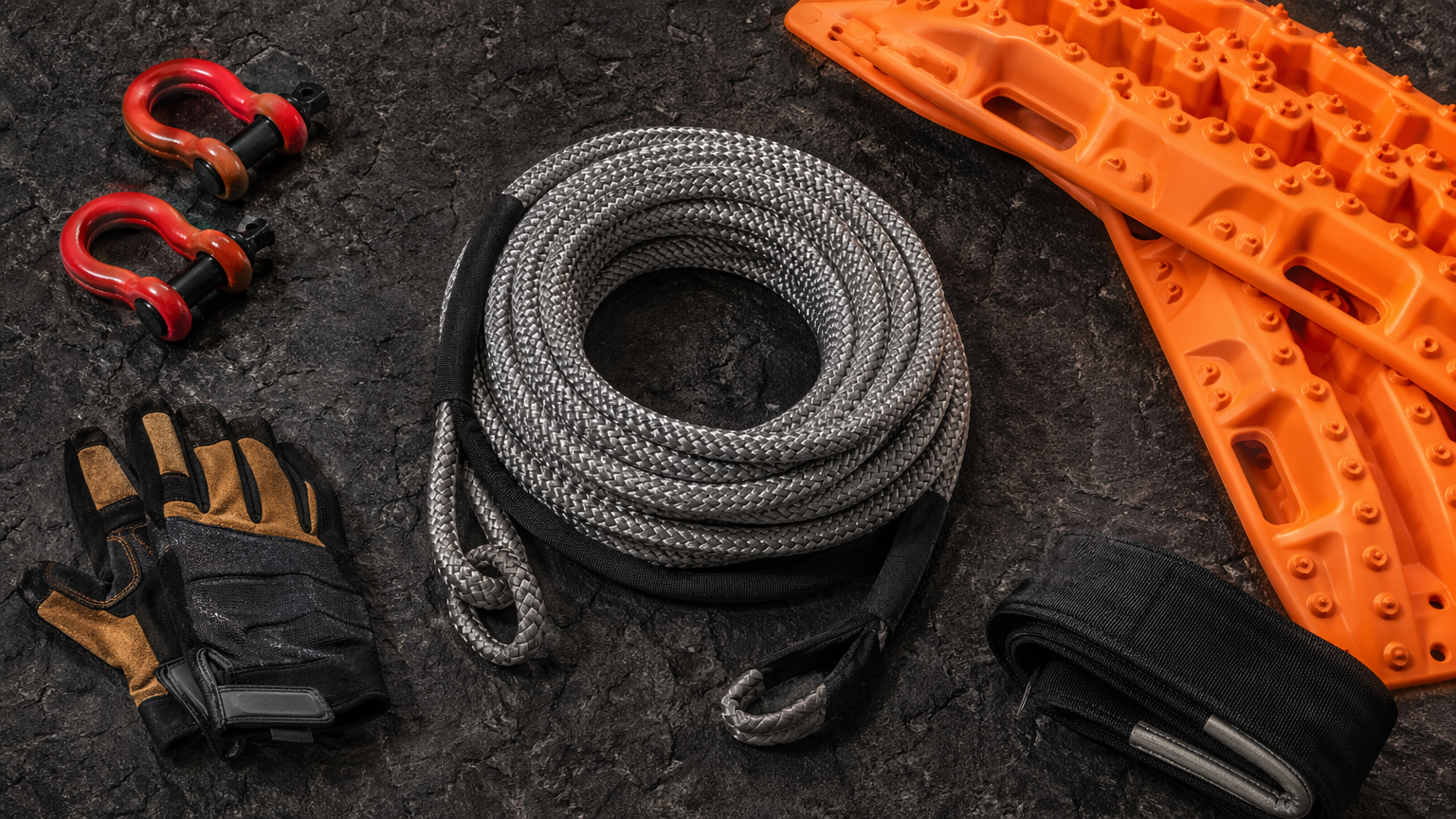
- Recovery boards, tow straps, and kinetic ropes
- Mount inspection, wiring, and fairlead install
Skid Plates & Underbody Protection
Full belly protection for transfer case, oil pan, fuel tank, and differentials — plus rock sliders to keep rocker panels intact. A $15,000 suspension build is worth nothing if a single rock contact takes out the transfer case on the way up the trail.
- Full belly skids: engine, trans, t-case, tank
- Aluminum or steel construction
- Bolt-on rock sliders with step plates
- Differential covers and control arm skids
- Drainable pans with service access
Bumpers & Armor
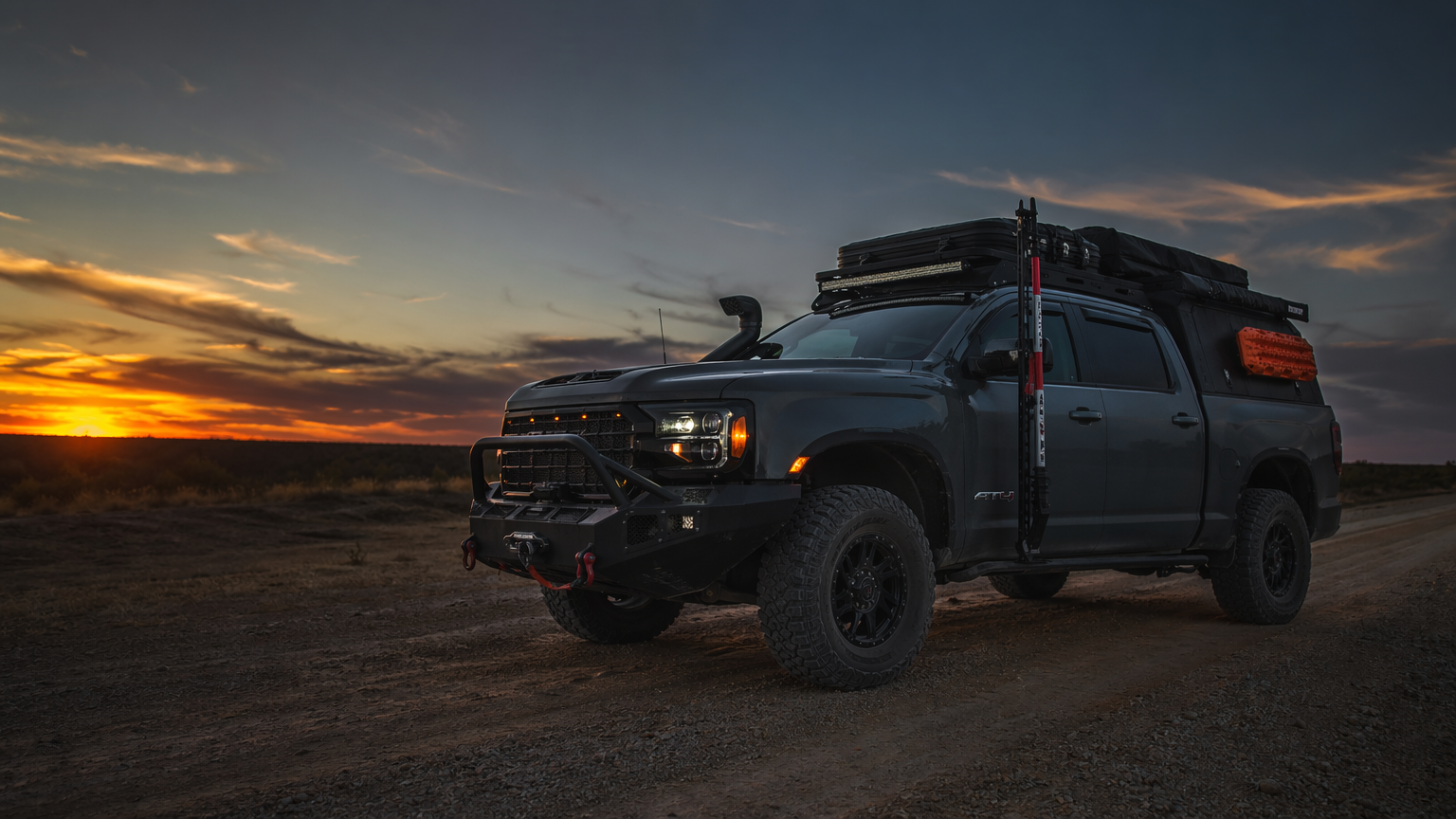
Front and rear steel bumpers, stubby and mid-length cuts, and integrated rock sliders. Real function — better approach angle, a proper winch and light mounting platform, recovery points you can actually trust — paired with the visual identity of a truck that looks as built as it drives.
- Full-width, mid, and stubby front bumpers
- Rear bumpers with swing-outs & tire carriers
- Integrated winch & light mounts
- D-ring tabs rated and welded, not bolt-on
- Raw steel, bedliner, or powder-coat finishes
Roof Racks & Cargo
Overland-specific roof platforms, bed racks, and cargo solutions for customers who build for distance, not just the trail. Everything is mounted to real structure with proper load paths — not trim clips and wishful thinking.
- Low-profile and full-length roof platforms
- Bed racks for RTTs, awnings, and fuel cans
- MOLLE panels and gear-track mounting
- Awning brackets and traction-board mounts
- Weight-rated for RTTs and expedition loads
Accessories & Recovery Pricing Tiers
Transparent pricing, no surprises. Every install includes test-fit, torque verification, load-path inspection, and a post-install function check. Parts & labor included in ranges shown.
Recovery Kit Starter
- Kinetic recovery rope + soft shackles
- 2-pack recovery boards, mounted
- Tree saver and snatch block
- Rated D-ring hardware
- Storage bag and bed-mount bracket
Winch + Bumper Combo
- 9,500–12,000 lb winch, synthetic line
- Steel front bumper (stubby or mid)
- Solenoid relocation and wiring
- Hawse fairlead and in-cab controller
- Load-tested on our bench before delivery
Full Underbody Protection
- Engine, trans, t-case, and tank skids
- Rock sliders with weld-on step plates
- Differential covers (front + rear)
- Aluminum or steel, your choice
- Drain access preserved on every pan
Complete Overland Package
- Full armor + winch + recovery kit
- Roof platform or bed rack
- Awning + traction-board mounts
- Integrated lighting pass-throughs
- Full load-path review and documentation
Pricing varies by vehicle, brand tier, and fabrication scope. Final quote after free in-shop consult.
Accessories & Recovery Builds Off Our Bench
Every build is different. Here's a sample of recent installs — each one test-fitted, load-rated, and road-tested before delivery.
2022 Toyota 4Runner TRD Pro
Full overland package. Front bumper with integrated winch mount, low-profile roof platform loaded for RTT, awning bracket pre-wired for 12V lighting. Customer drove it to Moab two weeks after delivery.
2023 Jeep Wrangler Rubicon
Synthetic line winch with matching recovery kit — kinetic rope, recovery boards, soft shackles, bow shackles. Everything mounted to the tub with factory-style brackets we fabbed in-house.
2021 Ford F-150 Raptor
Front and rear steel bumpers with integrated D-rings, bolt-on rock sliders with step plates, and full underbody skid coverage from engine bay to rear diff. Functional, not just aesthetic.
2020 Ram 2500 Power Wagon
Bed rack built out for expedition use — RTT mount, 270° awning, Maxtrax brackets, and two jerry can holders. Load-rated platform welded to a proper bed-frame tie-in, not just clamped to rails.
2022 Chevy Colorado ZR2
Stubby front bumper to preserve the factory approach angle, full transfer case and oil pan skids, and a bed-mounted recovery kit for the customer's monthly Hill Country trips.
2023 Ford Super Duty F-350
Fleet truck used for trail recovery operations. Winch sized for repeated heavy pulls, bumper fabbed with double-reinforced D-ring tabs, and a full load-rated strap kit stowed in a bed locker.
Why Accessories & Recovery Gear Matter More in Houston
A stock truck can handle the commute. It can't always handle the flood street, the ranch gate, or the trail you didn't plan to be on. Here's why the right gear matters for where we actually live and drive.
Flood Streets & Unplanned Recoveries
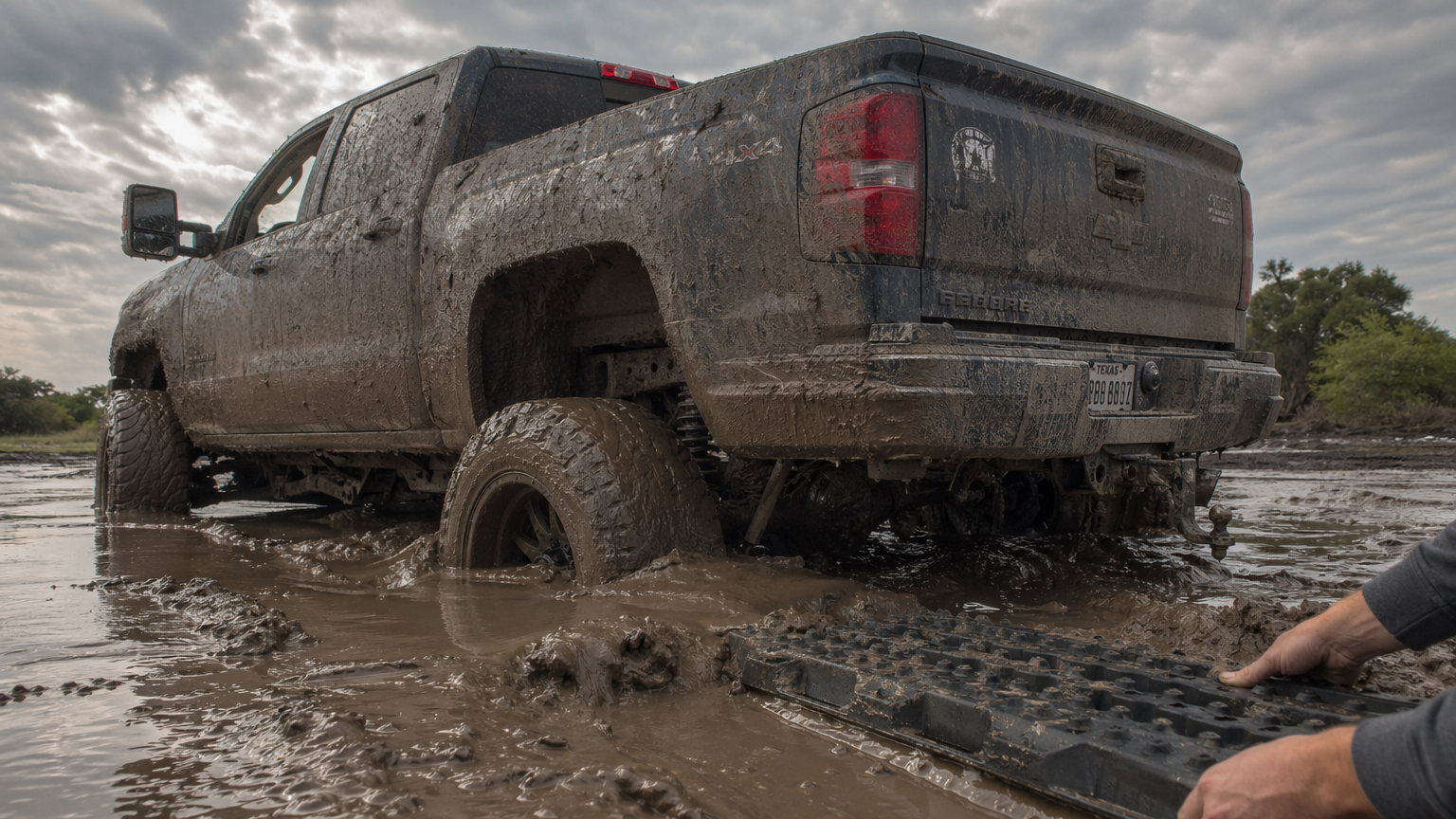
Houston floods. We all know it. Every big storm leaves someone stuck in a foot of water on a feeder road they thought was fine. A properly mounted winch, a rated recovery point, and a set of synthetic soft shackles in the bed turn that from a tow-truck bill into a twenty-minute pull — for you or for the neighbor you stop to help.
Hill Country & East Texas Trail Use
Hidden Falls, Barnwell Mountain, River Run. The trails we drive aren't Rubicon-level, but they've taken out plenty of transfer cases and oil pans from trucks that came unprepared. Real skid coverage, real rock sliders, and real recovery gear is the difference between finishing the trail and walking out to call AAA.
Overlanding in a Humid Climate
Our humidity eats cheap steel, cheap welds, and cheap bolts. Overland gear that survives a weekend in Colorado can rust out in six months of Houston summers if it wasn't coated right. We only install gear that's built for long-term weatherproofing — powder-coated, zinc-plated, or bare steel with proper bedliner.
Ranch & Work Use
A lot of our customers aren't weekend wheelers — they're ranchers, contractors, and people whose trucks work for a living. Winches for cattle gates, bed racks for work gear, skids for the same ranch road they drive every day. Accessory builds aren't always about trails; sometimes they're about getting home at 10 PM in the rain with a loaded bed.
How to Choose the Right Gear for Your Build
The "best" winch, bumper, or skid plate depends on how you actually use the truck. Here's how we help customers decide.
Winch Pull Rating: Size It Right
The rule of thumb is 1.5× your vehicle's gross weight. A 6,000 lb Tacoma needs a 9,000 lb winch minimum; a 7,500 lb Super Duty needs 12,000–16,500 lb. Undersized winches overheat, burn out motors, and fail when you need them most. We'll do the math with you, not guess.
Synthetic Line vs. Steel Cable
Synthetic is lighter, safer if it breaks, and floats in water — but needs UV protection and costs more. Steel is tougher against abrasion and cheaper but deadly if it snaps. For 90% of Houston customers we recommend synthetic. For heavy commercial use and brush-heavy ranch work, steel still has a place.
Stubby vs. Full-Width Bumpers
Stubbies preserve approach angle and keep weight down but give up some sensor real estate and tire coverage. Full-width bumpers look the part and protect more, but add weight that affects front-end geometry. We'll factor your lift height, tire size, and off-road priorities into the recommendation.
Aluminum vs. Steel Skid Plates
Aluminum saves 30–50 lbs per skid and resists corrosion — great for daily drivers who see occasional trail use. Steel takes harder hits without deforming and is half the cost — better for customers who wheel hard and don't mind the weight. Both are solid choices; the wrong one is whatever you grabbed because it was cheap.
What Actually Goes Into a Proper Install
Every recovery gear installation we do is test-fitted before final torque and load-path verified before it leaves our bay. Here's what that means in practice.
Winch Mount & Wiring
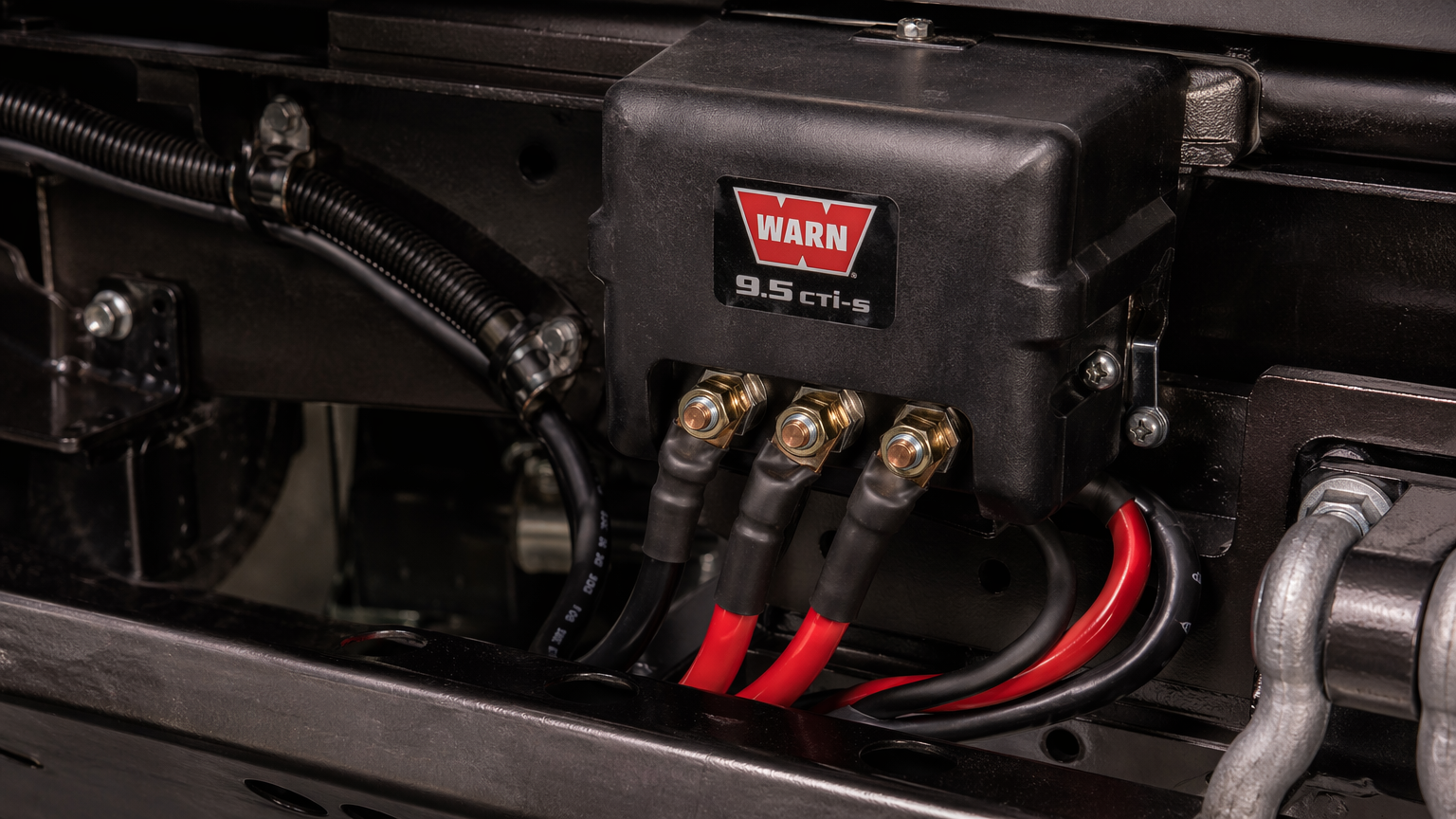
Winch mounts get torqued to spec with thread-locker on every bolt. Power cables run with proper gauge (2/0 for most 12,000 lb+ winches), protected where they pass through steel, and fused at the battery. Solenoid boxes relocated when needed to preserve cooling airflow. Controller sockets wired with weatherproof connectors and sealed boots.
Recovery Point Load Paths
A D-ring bolted to a bumper face plate is a lawsuit. Real recovery points are welded to structural members, gusseted, and rated in the direction of pull. We verify every recovery point can take a minimum of 2× the vehicle weight in a shock load — and document the rating so you know what you have.
Skid Plate Fitment
Skids get dry-fit first with every factory bracket location verified. Drain access for oil pans and transfer cases stays accessible — we won't install a skid that requires dropping the plate for every oil change. Factory crumple zones and crossmember relationships respected so nothing binds under articulation.
Roof & Bed Rack Load Paths
Roof platforms tie into factory mounting points or reinforced pillars — not just clamp to the gutter. Bed racks bolt to the frame or reinforced bed rails, never to plastic trim. Every rack install includes a documented static and dynamic load rating so you know what the platform can actually carry at speed.
Common Accessory Install Mistakes We Fix Every Week
We see the same mistakes over and over from DIY installs and low-effort shops. Here's what to watch for — and what we do differently.
Winch Wiring Through the Grille
Power cables routed through the factory grille or across the radiator without proper chafe protection. One hard pull and the cable shorts to the frame. We route every winch harness through protected channels with rubber grommets at every pass-through, and fuse the circuit within inches of the battery.
Bolt-On "D-Rings" on Bumper Face Plates
Bolt-on recovery tabs on a bumper face plate rely on two or four bolts to hold the entire shock load of a recovery. We've seen them tear out and whip through windshields. Real recovery points get welded to the frame or to structural gussets that tie back to the frame — not the bumper skin.
Skid Plates That Cover Drain Plugs
Cheap skids that require full removal to change the oil or service the transfer case. Customers stop servicing the fluids because it's a pain, and the drivetrain suffers. Every skid we install preserves factory drain and service access — period.
Roof Racks Clamped to Plastic Trim
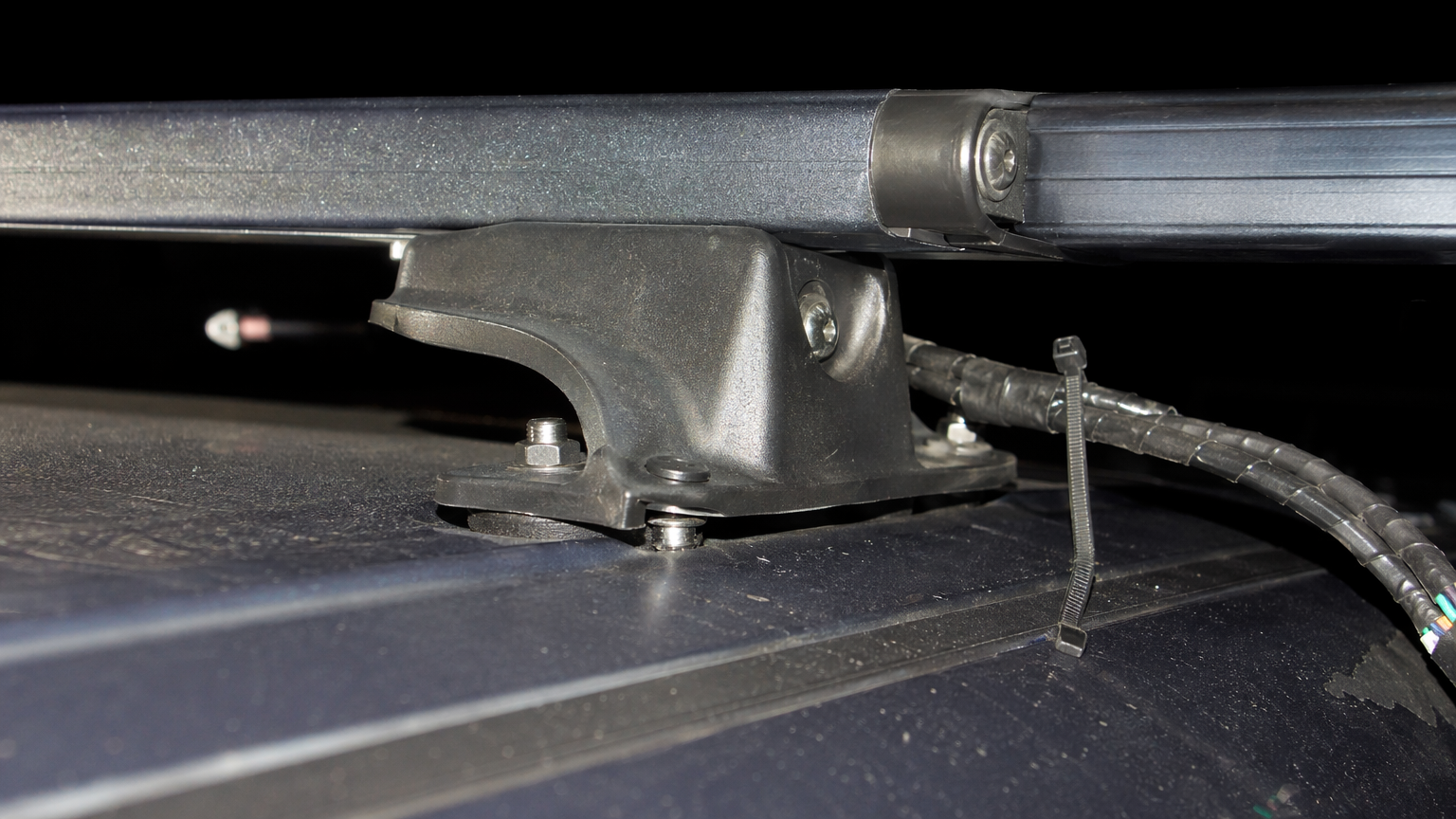
Tower-clamp roof racks rated at 150 lbs dynamic load on trucks carrying 200+ lbs of rooftop tent. They come loose at highway speeds. We install roof platforms to factory reinforced mounting points or through-bolt to reinforced pillar structure — with a real dynamic load rating documented.
Our Accessories & Recovery Install Process
We don't just bolt on parts and hand you the keys. Every build follows a five-step process — fit, weld, wire, load-test, and verify — so what leaves our shop actually works when you need it.
Consult & Spec
We review your vehicle, your trips, and your priorities. Winch for water recoveries or ranch pulls? Skids for weekend wheeling or daily-driven trails? The right gear starts with honest questions.
Test-Fit & Weld
Every bumper, skid, and rack dry-fit before final install. Fabrication done in-house where needed — custom brackets, gussets, or reinforcements — welded to factory structure, not bolted to sheet metal.
Wire & Mount
Winch power runs in proper gauge, fused at the battery, protected at every pass-through. Controller sockets sealed. Every bolt torqued to spec with thread-locker and documented.
Load-Test & Rate
Recovery points shock-load tested on our bench. Winches run through a full spool test under load. Roof and bed racks verified at rated dynamic load. Every system rated before it leaves the shop.
Review & Deliver
Full walk-through of every feature, connection point, and service-access consideration. Documentation folder for the glove box, warranty paperwork, and a 30-day follow-up check.
What Houston Drivers Are Saying
Reviews verified on Google. Names shortened for privacy.
"Had them install a 12,000 lb winch and steel front bumper on my 4Runner. Two months later I pulled a neighbor's Bronco out of a flooded underpass during Tropical Storm Imelda's cousin. The winch worked flawlessly, the recovery point held, and I had the right gear in the bed because they set me up right the first time."
"Full belly skid install on my Wrangler. They actually took the time to show me how to access every drain plug and service point with the skids in place. Other shops told me I'd have to drop the plates for every oil change — Iron Ridge designed it so I don't. Huge difference in ownership experience."
"Built out a full overland platform on my Tacoma — roof rack, awning, bed rack, recovery kit. What sold me was the load-path documentation they handed over at delivery. Every mount was engineered, not guessed. Drove it to Big Bend and back with a rooftop tent, zero issues."
Accessory & Recovery Gear Questions, Answered
How long does a typical accessory build take?
Simple recovery kit installs are a half-day. Winch + bumper combos run one to two full days. Full underbody armor is typically two to three days depending on fabrication scope. Complete overland builds — armor, winch, racks, recovery — can be a full week. We give you an exact schedule at consult.
Do I really need a winch if I only wheel occasionally?
Depends on where you wheel and who's with you. If you're always in a group with other rigs, probably not. If you go solo, run the ranch, or drive through Houston floods often, yes. The real question isn't "do I wheel often" — it's "what happens when I need recovery and there's no one around."
What does "load-rated" actually mean on my install?
It means we've verified — with documented testing or certified hardware — that the installed component can handle its intended shock load. Recovery points rated to 2× vehicle weight minimum. Roof platforms rated to a documented dynamic load. Every rating on paper, in the folder we give you at delivery.
Can I bring my own parts?
Yes. We install customer-supplied gear using the same standards we use on our stocked brands. We'll tell you honestly if the part you bought won't hold up — but the choice stays yours. Labor rate is the same either way.
What warranty comes with the install?
Our labor is warrantied for 2 years on workmanship (welds, fitment, mounts, wiring). Parts carry whatever the manufacturer offers — typically lifetime on ARB, Warn, and Baja Designs bumpers and winches. We handle warranty claims on your behalf for any product we sold and installed.
Can you install gear on a truck that already has a lift and tires?
Absolutely — and we recommend you tell us exactly what's on the truck at consult. Lift height, tire size, and drivetrain changes all affect clearances, approach angles, and rack load paths. We factor everything in from the first measurement.
Accessory & Recovery Installs Across Greater Houston
Our shop serves drivers from across the Houston metro and beyond. If you're within reasonable driving distance, we've probably outfitted a truck from your zip code.