What Long Arm Suspension Actually Changes
Short arm suspension — factory or aftermarket — is constrained by the length of the stock control arm mounting points. When you lift a truck on short arms, the axle swings through a tighter arc under compression and droop. Pinion angles swing harder through the stroke, caster loses correction at ride height, and the ride gets busy at speed. A long arm system moves the chassis-side pickup rearward and uses longer control arms to flatten that arc.
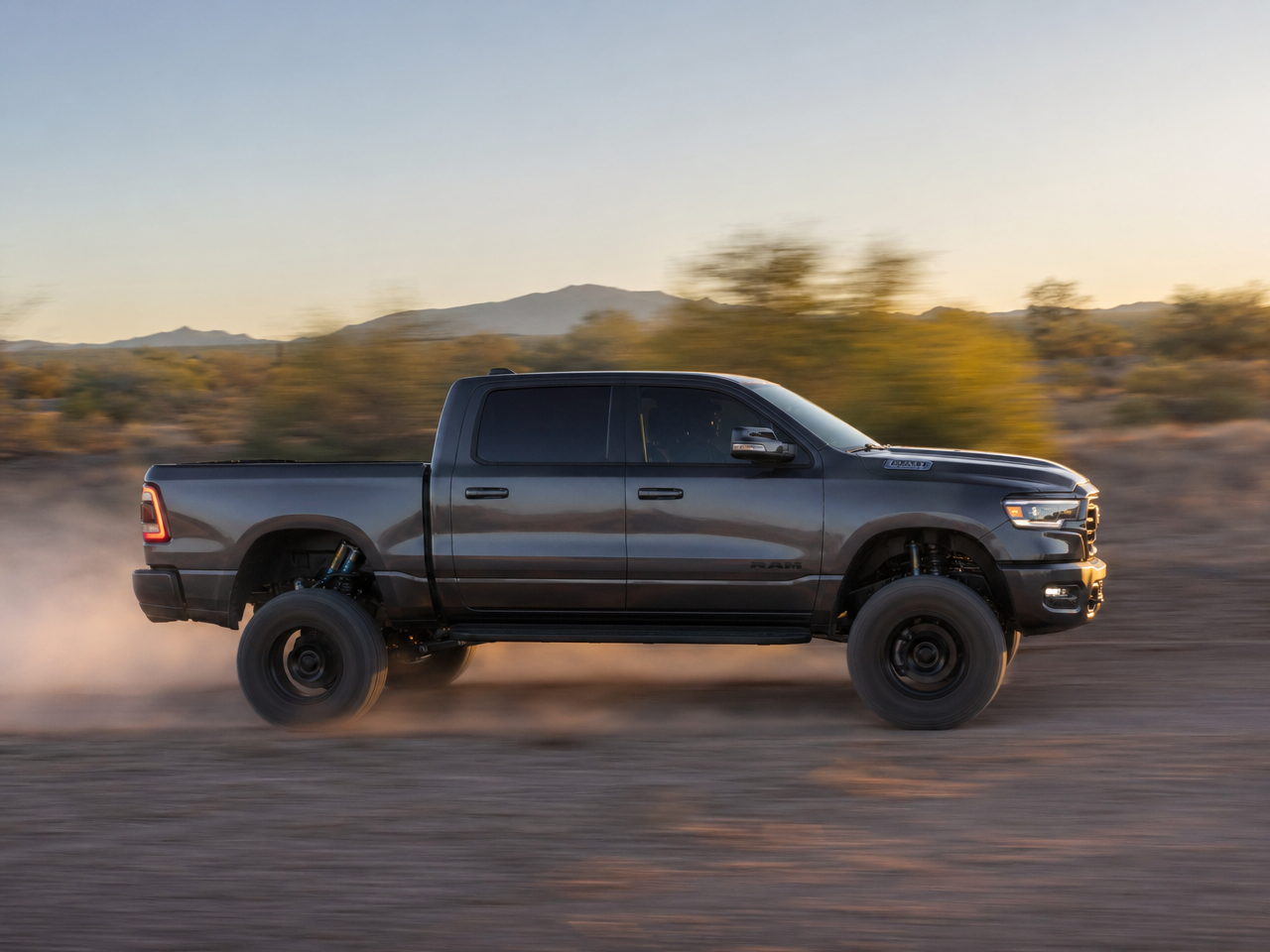
The result is not just more lift. It is a fundamentally different geometry. Pinion angle change across the full range of travel drops dramatically, which protects the driveline and smooths power delivery on the trail. Caster holds correct at lifted ride height without aggressive ball joint adjusters. The truck stops pitching and hunting on washboard. Front-end bump steer on rough Hill Country two-track quiets down. This is the reason long arm exists — and it is the reason the owner who has driven both will never go back.
If you are chasing a number on a tape measure, short arm kits get you there. If you are chasing how the truck feels at 45 mph across rough desert floor, through rock gardens at crawl speed, and on the interstate back to Houston afterward — that is a long arm conversation.
Long Arm vs Short Arm — When The Conversation Changes
Short arm kits are the right answer for the majority of builds we quote. They are less invasive, less expensive, cleaner to install, and perform exceptionally well for weekend trail use, moderate off-road, and the daily-driven truck that sees Sam Houston National Forest on Saturdays and a commute during the week. A well-chosen short arm kit on a properly matched tire and wheel combination is not a compromise — it is the right tool for that build.
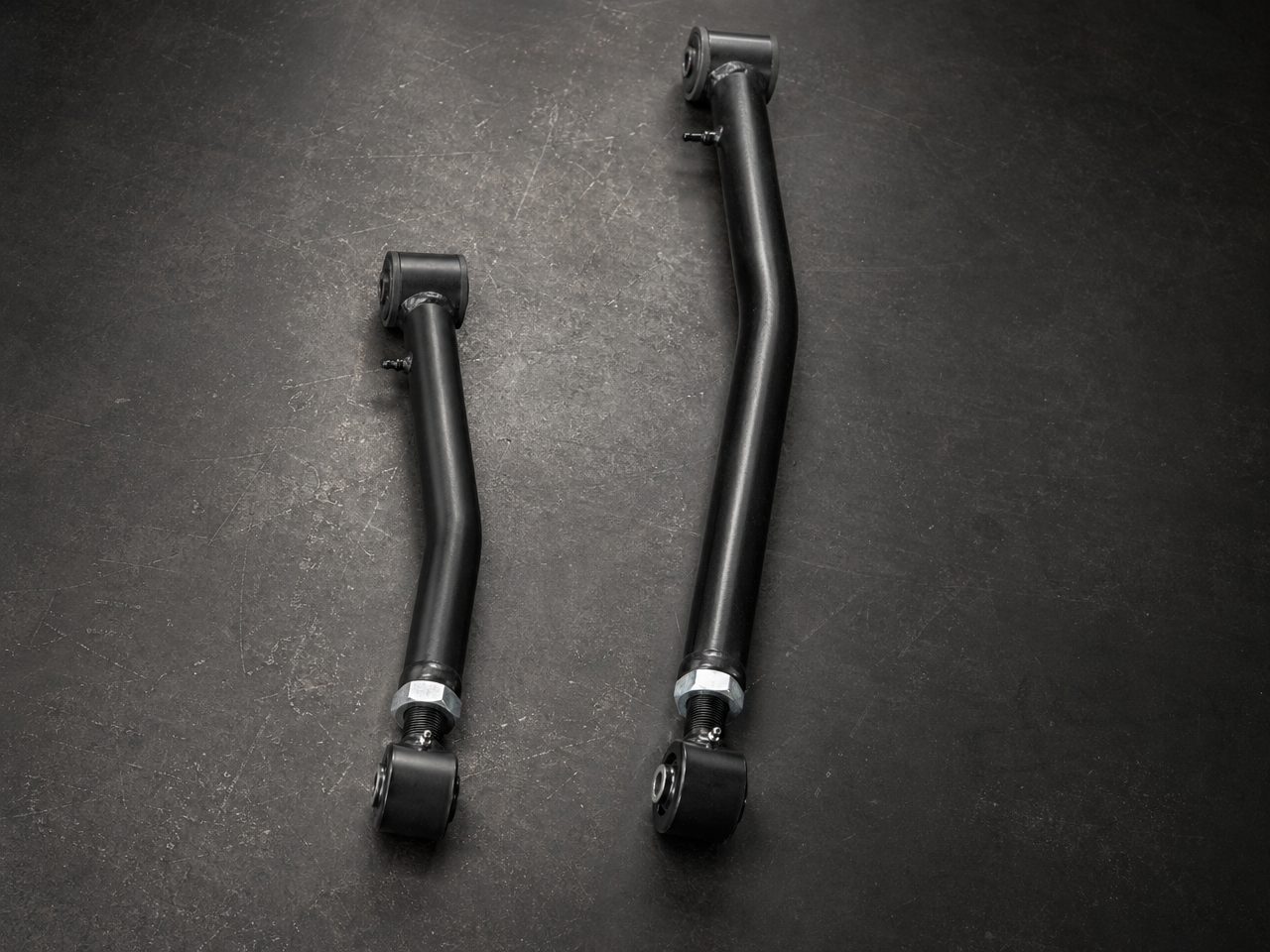
The long arm conversation starts when the scope of use changes. If you are running 37-inch tires or larger, covering ground at speed in West Texas or the New Mexico desert, running rough high-speed two-track in Big Bend or the Hill Country, or building a rig that needs to perform at a high level across a wide band of terrain without compromise — that is when long arm earns its cost. At that tire size and that usage, the geometry benefits of long arm stop being academic and start being the difference between a truck that works and a truck that beats you up.
Short Arm Is The Right Call When
The truck is primarily daily-driven. Tire size is 35s or smaller. Trail use is weekend and moderate. Budget and build scope favor a cleaner, less invasive install. You are not chasing high-speed desert performance.
Long Arm Is The Right Call When
Tire size is 37s or larger. Terrain includes high-speed rough two-track. The truck needs to perform across a wide range of terrain without geometry compromise. You have driven a properly built long arm rig and understood the difference immediately.
We will tell you in the consultation which side of that line your build sits on. Not every truck needs long arm — and we are not in the business of selling a customer a system that is not the right answer. That honesty is why long arm customers drive to us from Katy, The Woodlands, Spring, Conroe, Pearland, and all the way down to Galveston and Angleton.
Radius Arms vs Four Link Systems
Not all long arm systems are built the same way. The architecture matters — and the right architecture depends on the platform, the tire size, the terrain, and the goals for the build.
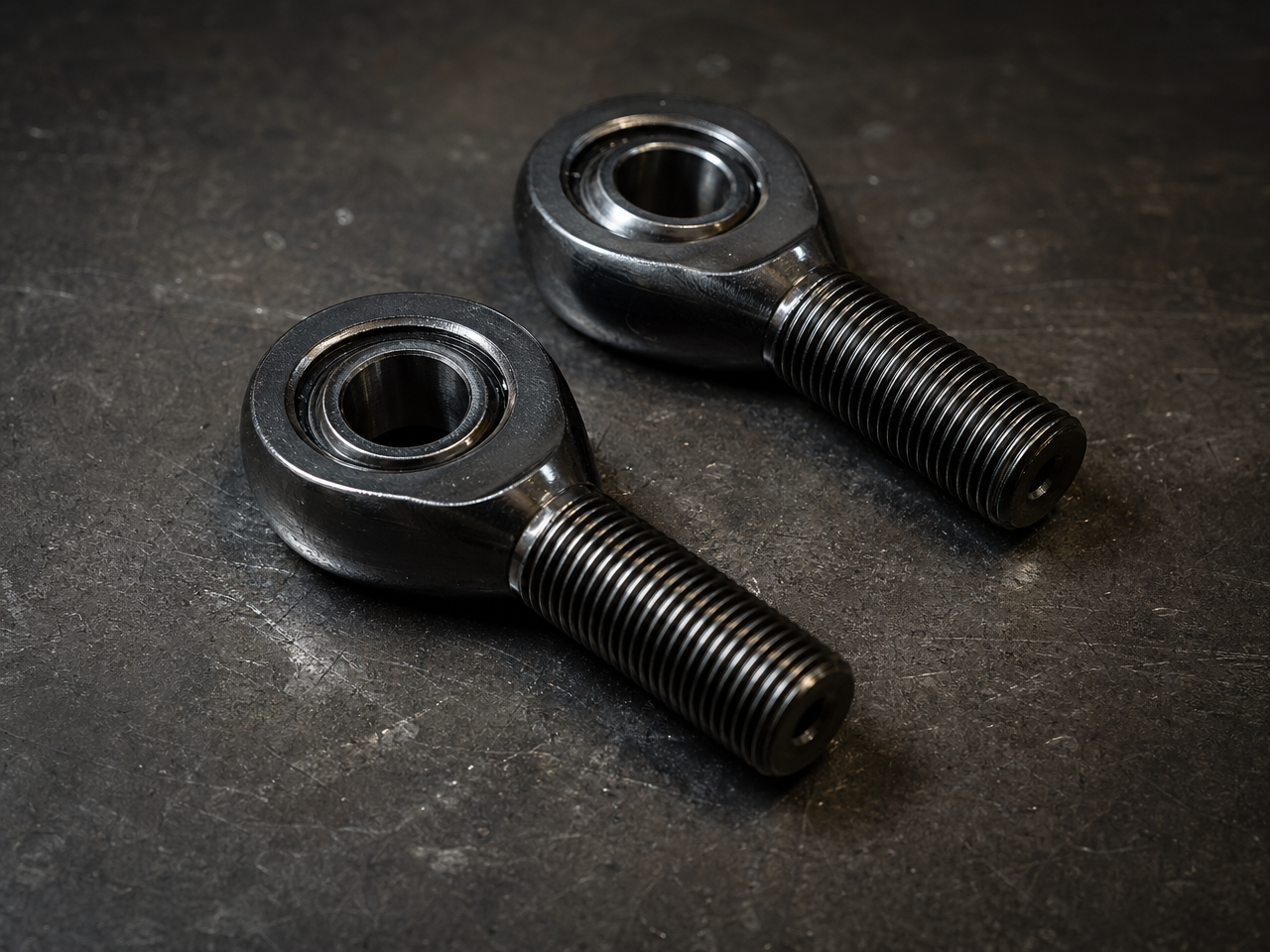
Radius Arm Long Arm
Retains the factory front axle mounting architecture. Common on Ford Super Duty, Ford Bronco, and solid-axle platforms where the radius arm is the natural upgrade path. Cleaner install, preserved factory geometry philosophy, excellent at 4 to 6 inches of lift with proper correction. The right call when the platform was engineered around a radius arm from the factory.
Four Link Long Arm
Replaces the entire front or rear suspension geometry with a purpose-built triangulated or parallel four link. Maximum articulation. Fully tunable — anti-squat, roll axis, instant center are all design variables rather than factory-given constraints. The right call for the dedicated trail rig, the high-articulation crawler, or the build where the owner wants every geometry variable on the table.
On a Jeep Wrangler JK or JL we quote both — radius arm for the daily-driven trail rig at 4 to 6 inches, four link for the dedicated build running 40s and true rock work. On a Super Duty we almost always quote radius arm long arm because the platform is purpose-built for it. On custom fabrication builds, four link is on the table from the first sketch. We do not sell one architecture because it is the one we carry. We sell the one that matches the truck and the mission.
What The Install Actually Involves
Long arm suspension is not a bolt-on afternoon project and anyone who tells you otherwise has not done one correctly. Moving the control arm pickup points rearward means the frame rails get clearanced. Skid plates get modified or replaced to clear the new crossmember. Driveshafts get addressed — front shaft length, rear shaft angle, and CV joint working angle all change. Alignment specs change because caster and camber now live at different geometry. Brake lines and brake hoses need to be evaluated for the new range of motion at full droop. Track bar geometry has to be corrected or the front axle shifts under articulation.
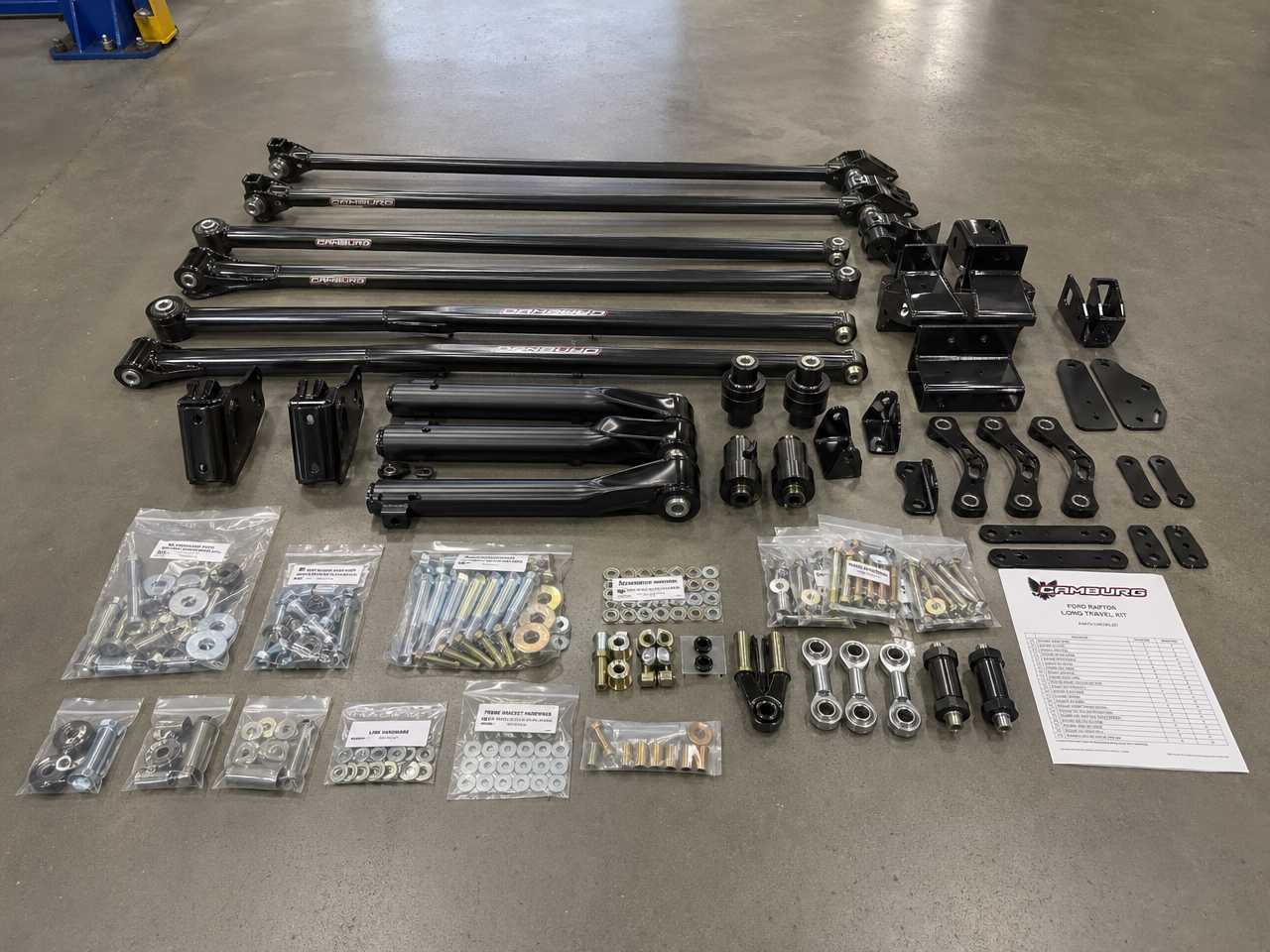
We treat a long arm install as a system build, not a parts swap. Every downstream component that is affected by the suspension geometry change gets evaluated before the truck leaves the shop. That is why a long arm install on the quote looks different from a short arm install on the quote — because the work is different. We would rather show you the full scope on paper before the truck comes in than surprise you with it halfway through the build.
- Frame rail clearancing where the platform requires it — measured, reinforced, and finished properly
- Skid plate and crossmember modification or replacement to clear the new arm geometry
- Driveshaft evaluation — length, angle, CV working angle, and high-angle U-joint specification if required
- Brake line and ABS line length check at full articulation — extended or re-routed as needed
- Track bar, panhard bar, and steering geometry correction for the new ride height
- Alignment performed at full build ride height with corrected specs — not factory specs
- Bumpstop geometry verified so the suspension does not contact itself at full compression
Lift Height and Tire Fitment
Most bolt-in long arm systems from quality manufacturers support 4 to 6 inches of lift at the entry level. Purpose-built and custom-fabricated systems can go further — 8 inches and beyond on the right platform with the right plan — but the conversation stops being about catalog kits and starts being about design at that point.
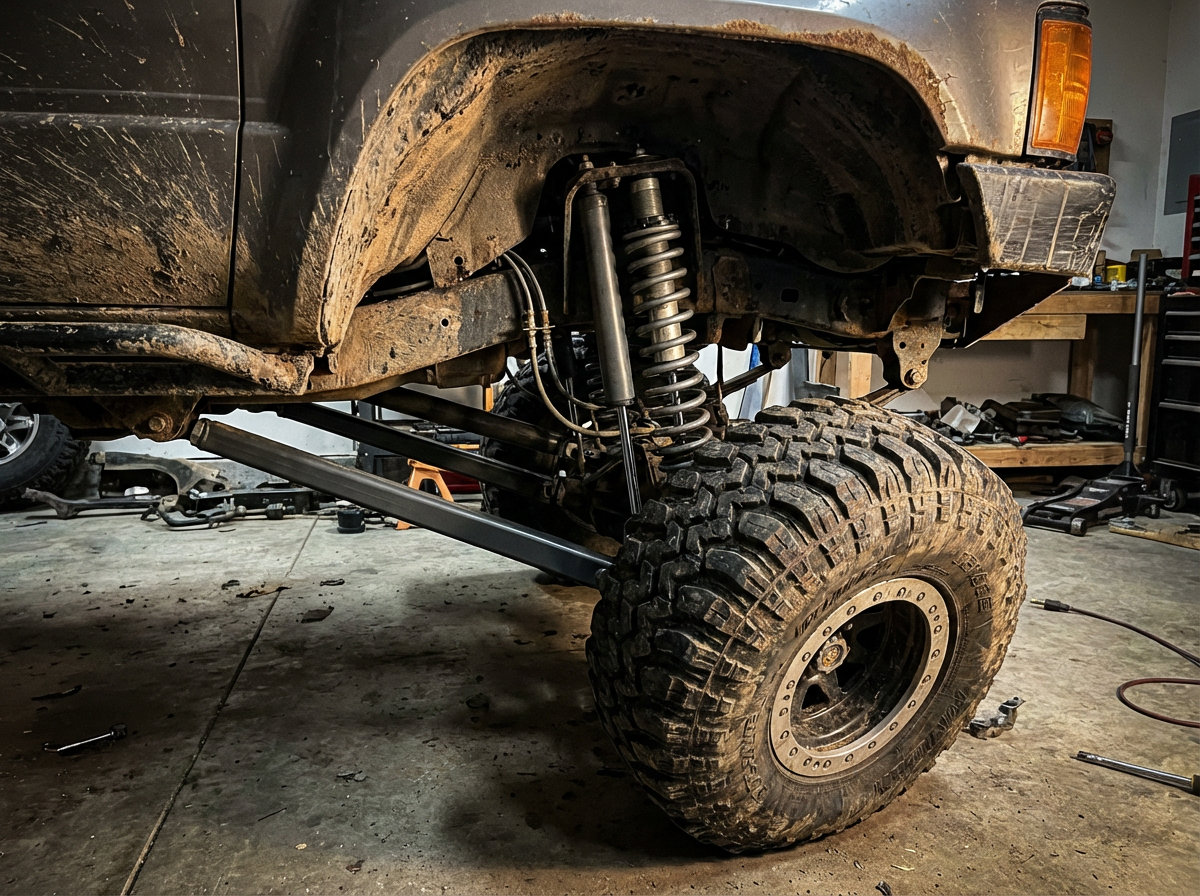
The tire fitment conversation with long arm is where the system earns its keep. If you are running 37-inch tires on a Jeep JL or JK, a 4 to 6 inch long arm system with the right wheel backspacing, fender work, and bump stop tuning will carry that tire with proper geometry at full articulation. Go to 40s and four link four-corner builds come onto the table. Super Duty running 37s or 40s with a radius arm long arm settles down in a way a short arm kit at the same lift simply cannot match at speed.
We do not force tires to fit on a suspension that was not designed for them. The suspension comes first, the tire size follows the suspension, and the geometry gets the final word. That is how a properly built long arm rig ends up running 37s to 40s without destroying ball joints, eating tires at the edges, chattering steering components, or punishing the driver on the way home to Houston.
- Jeep Wrangler JK / JL — 4" to 6" bolt-in long arm, 37s to 40s achievable with proper fitment
- Ford Super Duty F-250 / F-350 — 4" to 6" radius arm long arm, 37s to 40s standard pairing
- Ford Bronco 6G — radius arm system with carrier, 35s to 37s with geometry correction
- Toyota Tacoma / 4Runner — long travel front systems, custom rear four link where required
- Jeep Gladiator JT — long arm rear conversion for load and articulation, 37s to 40s
- Custom platforms — full four link fabrication builds, lift and tire size engineered from the chassis up
Is Long Arm Actually The Right Call For Your Build?
Come in for a consultation. We look at the truck, we talk about how you actually use it, what tire size you are running or planning to run, and where the build is going long term. If long arm is the right answer we tell you what system, what lift height, what the install scope looks like, and what the quote looks like — in writing — before any commitment is made. If long arm is not the right answer for your build, we tell you that too and we quote the short arm kit that is. The consultation is where the right call gets made.
Book The Consult → See What We BuildServing Drivers From Across Greater Houston
Our shop serves drivers from across the Houston metro and beyond. Wherever you're driving from, we've probably built a truck from your zip code already.