Wheels &
Tires
From all-terrain daily drivers to full beadlock competition setups, Iron Ridge Off-Road carries the brands, does the fitment right, and backs every install with a 12-month guarantee. We don't just bolt on wheels — we dial in the whole system.
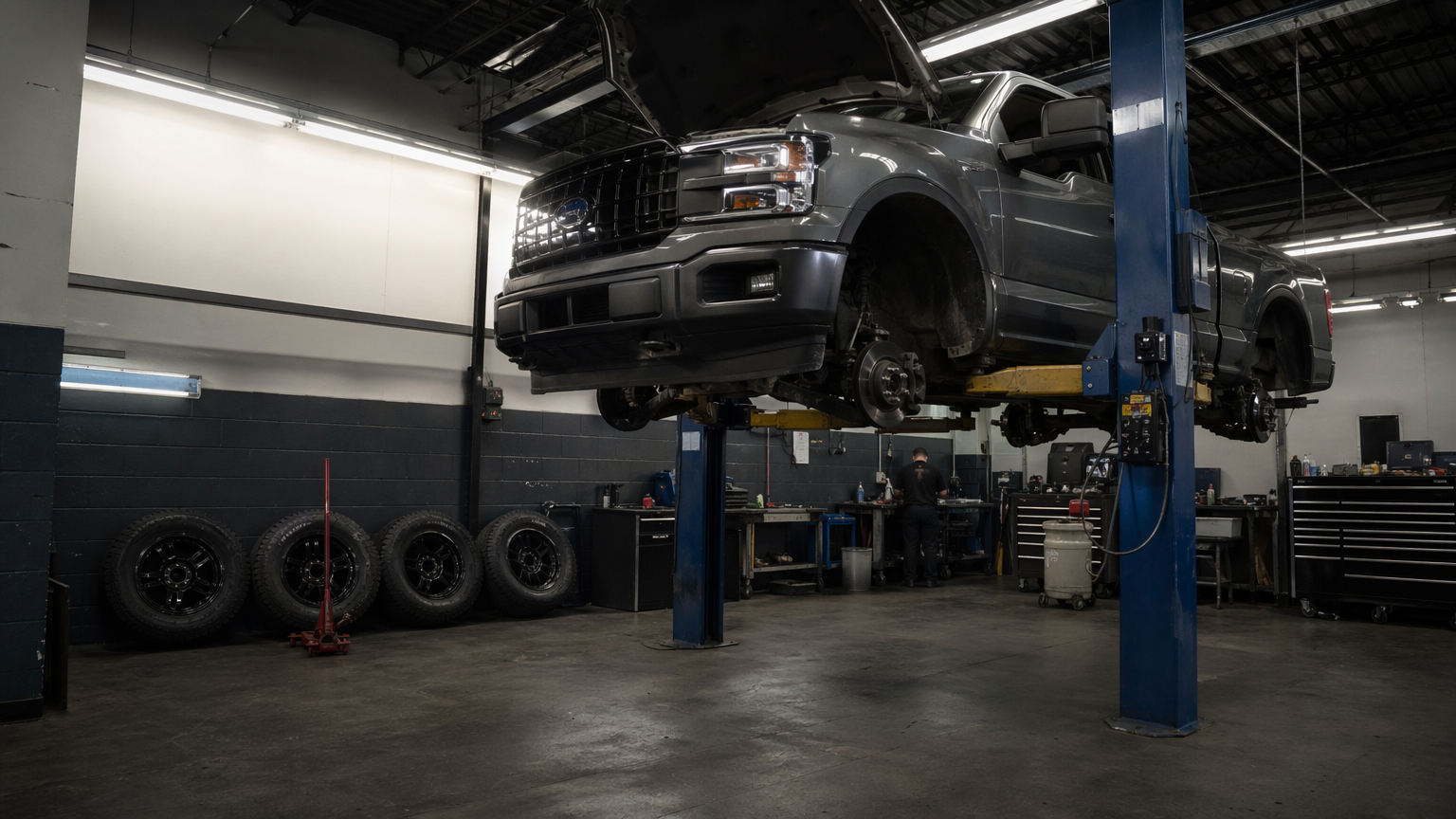
Full Wheel & Tire Services
From budget-smart all-terrain packages to full competition beadlock setups — we handle the whole job in one visit. No ordering parts separately, no multiple trips, no wondering if your new wheels will clear your fenders.
- ✓Expert fitment consultation — we know what fits before you buy
- ✓Mount, balance, and TPMS setup in one appointment
- ✓Post-install alignment on every wheel & tire job
- ✓6-month warranty on installation workmanship
- ✓Trade-in credit on your stock wheels & tires
The daily driver upgrade. Great for light trail use, muddy work sites, and improving your truck's look and capability without going extreme.
- 17"–22" aftermarket wheel options
- All-terrain tires: Toyo AT3, Falken Wildpeak, BFG KO2
- Up to 35" tire diameter on stock or leveled trucks
- TPMS sensor transfer or replacement
- Full mount, balance & alignment
Aggressive tread patterns built to claw through Texas mud and rock. We spec the right compound for your driving conditions so you get grip without killing your MPG.
- Mud terrain tires: BFG KM3, Nitto Trail Grappler, Toyo MT
- 35"–40"+ sizing on lifted rigs
- Wheel width and offset for mud clearance
- Regear recommendations if needed
Run lower tire pressures on the trail without risking a de-bead. We carry and install true bead-locking wheels for serious off-road use.
- Brands: Method Race Wheels, Fuel Off-Road, KMC
- Simulated and true bead-lock options
- Correct torque spec on all ring bolts
- Hardware: lug nuts, hub rings, valve stems
- Retorque service available at 500 miles
Running a larger tire footprint often means a leveling kit or wheel spacers to clear the fender. We do it all in one appointment — level, wheels, tires, and alignment.
- Billet aluminum wheel spacers (hub-centric)
- 2"–3" leveling kit combos
- Factory TPMS retained or upgraded
- Post-install alignment on every job
Brands We Stock & Install
We're authorized dealers for the brands that matter in off-road. No knockoffs, no grey-market imports.
Straight Pricing, No Surprises
These are real starting-point prices. Your exact quote depends on vehicle, wheel size, and tire selection — but you'll know your number before we start.
- Set of 4 all-terrain tires
- Aftermarket or OEM wheels
- Professional mount & balance
- TPMS sensor transfer
- Alignment check
- Up to 33" tire diameter
- Set of 4 MT or aggressive AT tires
- Aftermarket wheels (17"–20")
- Mount, balance & full alignment
- TPMS sensors (new or reused)
- Lug nuts & valve stems included
- 35"–37" tire fitment
- Leveling kit add-on available
- True beadlock wheels (set of 4)
- Competition-spec MT tires
- Ring bolt torque to spec
- 37"–40"+ sizing available
- Full alignment post-install
- 500-mile retorque included
- Custom lug nut upgrade
Fresh Off Our Rack
A few recent setups we're proud of. Every build comes with a full writeup of specs so you know exactly what went on your rig.
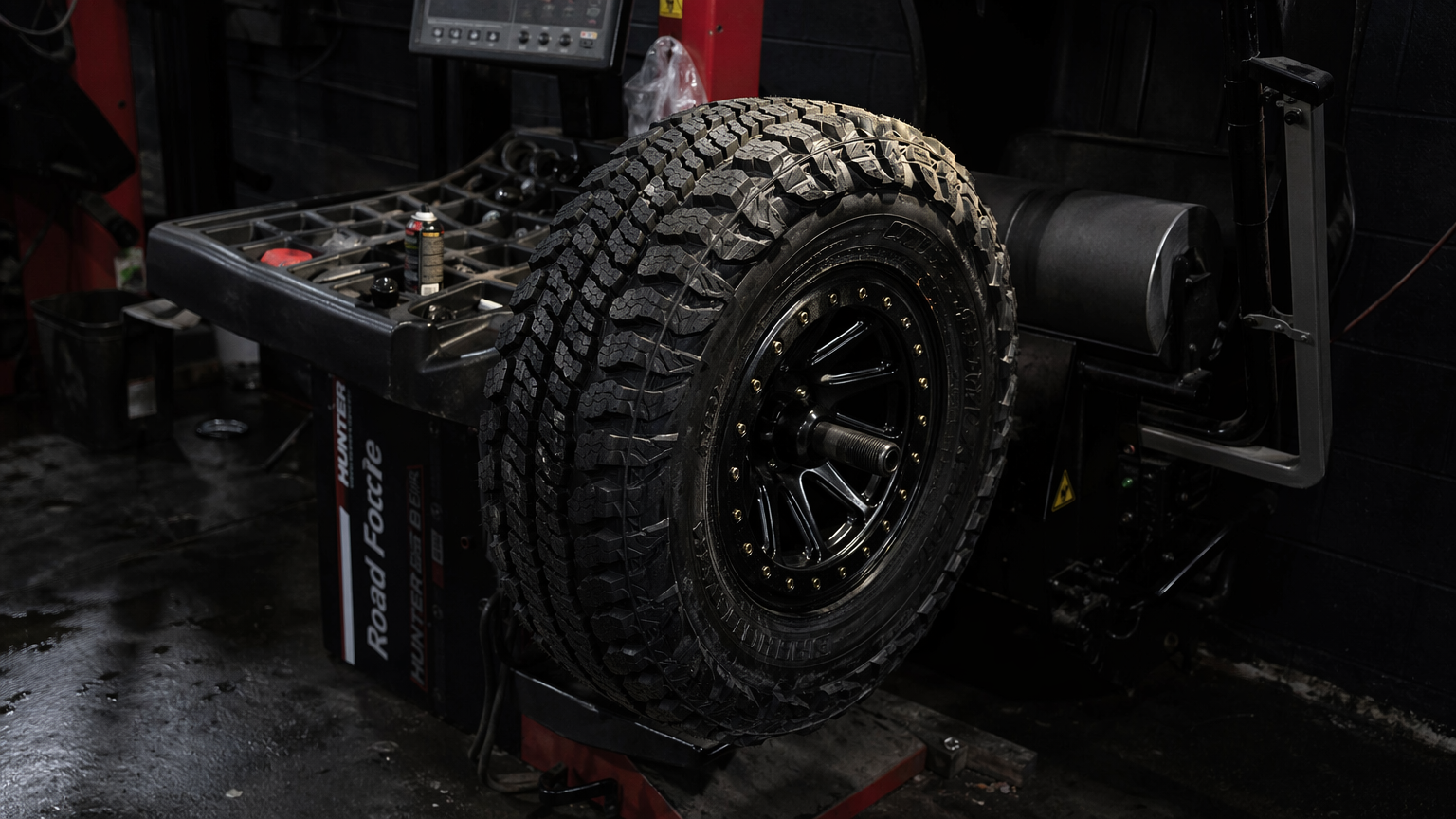
Before You Pick a Tire — Think About What You're Actually Doing With It
Most buyers come in knowing they want "something aggressive." That's a starting point, not a spec. The single most important question we ask before recommending a tire isn't about brand or tread pattern — it's about how you're actually going to use the truck.
Gravel & Dirt Roads
Maintained ranch roads, caliche, light off-pavement driving — this is 80% of Houston-area "off-road" use. You don't need to air down for this. A quality all-terrain tire at street pressure handles it fine, wears normally, and gets you home without a second thought. Don't overcomplicate it.
Real Trail Work
Rocky terrain, loose dirt, deep ruts, creek crossings — this is where tire pressure becomes part of the build conversation. Airing down increases your tire's contact patch, improves traction dramatically, and lets the sidewall flex over obstacles instead of bouncing off them. The difference between 35 PSI and 18 PSI on a rocky trail isn't subtle — it's night and day.
Technical Terrain
If you're doing serious rock crawling or technical trail work, beadlocks and a proper compressor aren't upgrades — they're the right tools for the job. The tire wraps around rocks at low pressure instead of bouncing off them. This is a fundamentally different capability tier.
Sidewall Strength Changes Everything
Not all tires can air down equally — and this is where the selection conversation changes.
A tire with a thin, lightweight sidewall — common on all-season crossovers and some entry-level ATs — risks de-beading or sidewall damage if you drop pressure too low. You might get to 25 PSI safely, but not much further.
A proper Load Range E mud terrain or rugged terrain tire with a thick, reinforced sidewall can safely run 15–18 PSI on the trail without risk of de-beading a standard wheel. That sidewall compliance is part of what you're paying for with a quality MT tire — it's not just tread pattern.
True beadlock wheels take it further. Because the bead is mechanically clamped to the wheel, you can run 8–12 PSI in technical terrain without any de-bead risk. That's a completely different level of traction — the tire essentially wraps around rocks. If you're doing serious trail work, beadlocks aren't an upgrade, they're the right tool.
Airing Back Up Is Non-Negotiable
A tire at trail pressure on the highway is dangerous. Low pressure generates heat rapidly at speed, increases stopping distance, and destroys the tire's internal structure over time. Every trail rig needs a plan for getting back to street pressure before hitting the road home.
This is where onboard air enters the build conversation. A quality compressor — Viair, ARB, or similar — mounted under the hood or in the bed means you air back up in 5–10 minutes without hunting for a gas station. It's one of the most practical upgrades a trail truck can have, and one we install regularly as part of a full wheel and tire build.
Running trails regularly?
Ask us about adding an onboard air system to your build quote. We install Viair and ARB compressors with tank setups — never get caught flat on the trail or stuck at trail pressure before the highway again.
How to Choose the Right Tire for Your Truck or Jeep
The tire aisle — whether you're walking through a shop or scrolling a product page — is overwhelming. Hundreds of options, dozens of brands, and marketing language designed more to sell than to inform. Here's a straight breakdown of what actually matters when you're selecting tires for a lifted truck or off-road Jeep.
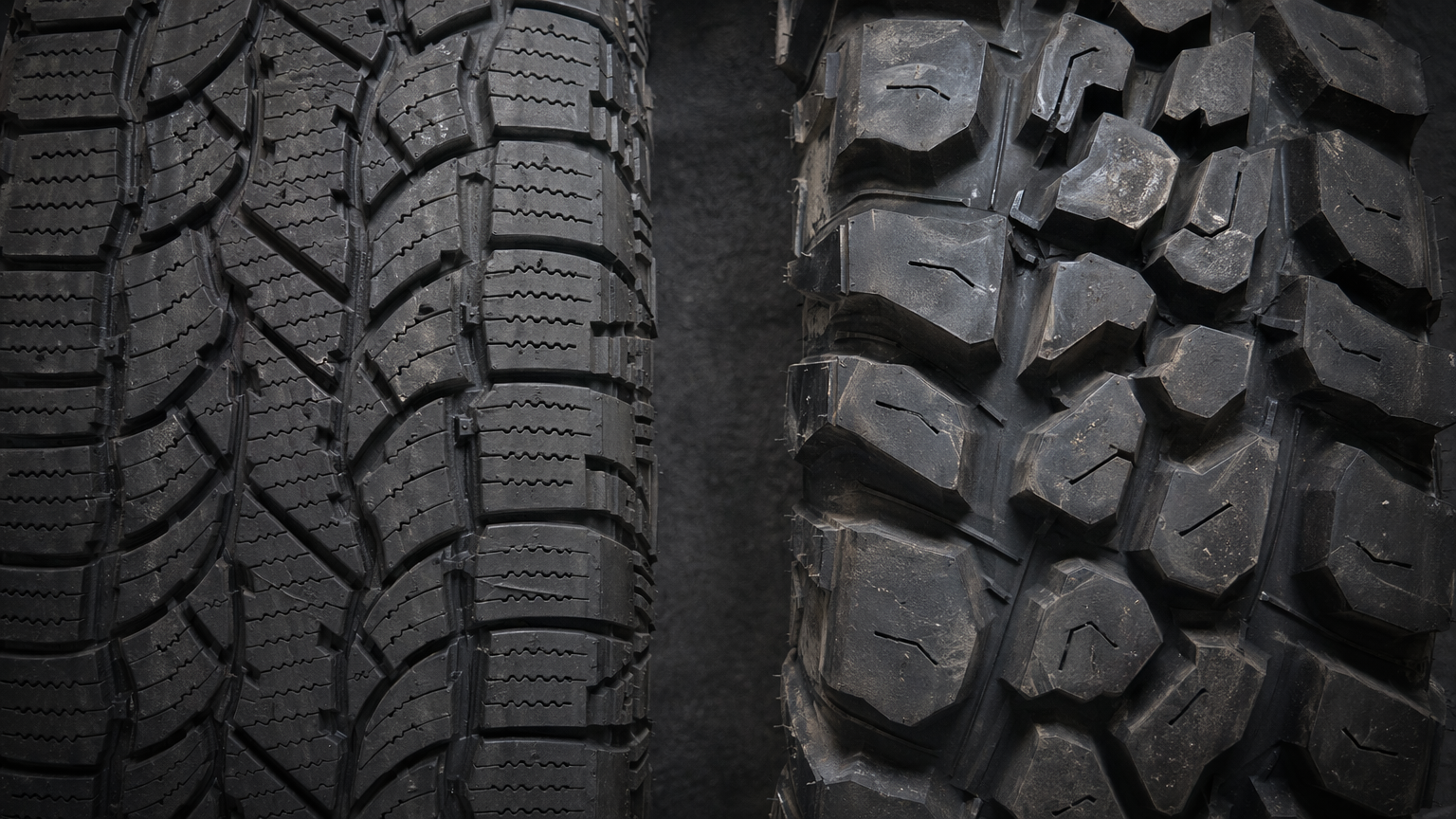
All-Terrain vs. Mud-Terrain vs. Rugged-Terrain
This is the most common question we get at the shop, and the honest answer is: it depends entirely on your split between on-road and off-road driving. Here's how to think about it:
All-Terrain (AT) tires are the daily-driver sweet spot for most Houston truck owners. Tires like the BFGoodrich KO2, Toyo Open Country AT3, and Falken Wildpeak AT3W offer aggressive enough tread for light to moderate trail use, good wet-weather traction for Houston's rainy seasons, and acceptable highway noise levels. If 80%+ of your miles are on pavement, an AT is almost certainly the right call.
Mud-Terrain (MT) tires are purpose-built for deep mud, clay, and rocky terrain. The wide tread blocks and aggressive sidewall lugs that make an MT so capable in the Sam Houston National Forest are also what makes them loud, rough-riding, and higher-wear on the highway. MT tires like the BFG KM3, Nitto Trail Grappler, and Mickey Thompson Baja Boss are the right call if you're doing serious off-road runs at least 2–3 times a month and you're OK with the highway trade-offs. In Houston's clay soil specifically, an MT with open, self-cleaning tread is dramatically better than an AT in deep mud conditions.
Rugged-Terrain (RT) tires like the Nitto Ridge Grappler and Toyo RT sit between AT and MT in both capability and on-road behavior. They've become very popular with daily-driver builds that see occasional serious trail use — you get more bite than an AT, less noise than a full MT.
| Type | Off-Road | Highway Noise | Tread Life | Mud |
|---|---|---|---|---|
| All-Terrain (AT) | Moderate | Low | 60–70k mi | Light mud only |
| Rugged-Terrain (RT) | Moderate+ | Moderate | 50–60k mi | Moderate |
| Mud-Terrain (MT) | Aggressive | High | 30–45k mi | Deep mud |
| Beadlock + MT | Maximum | High | 30k mi | Competition |
Load Index & Ply Rating — Why They Matter
If you tow, haul, or plan to load your truck bed regularly, your tire's load index is non-negotiable. The load index is a number (e.g., 121) that corresponds to the maximum weight each tire can safely support. An undersized load index on a truck carrying 2,000 lbs of mulch or pulling a 6,000 lb trailer is a blowout risk — period.
Ply rating (now called Load Range) tells you the structural strength of the tire carcass. For most lifted trucks and Jeeps, we recommend Load Range E (10-ply equivalent) tires for anything that hauls or tows, and Load Range D (8-ply) as the minimum for any serious off-road use where sidewall puncture resistance matters. We'll check your GVWR and intended use before we spec a tire — and we'll explain exactly why we're recommending what we're recommending.
Sizing: What Does 37x12.50R20 Actually Mean?
Tire sizing numbers look cryptic until someone explains them once. Here's the breakdown using a common lifted truck size — 37x12.50R20:
37 = Overall diameter in inches (the tire is approximately 37 inches tall from ground to top). 12.50 = Section width in inches (how wide the tire is at its widest point). R = Radial construction (virtually all modern truck tires are radial). 20 = Wheel diameter in inches (fits a 20-inch rim).
The jump from, say, a stock 265/70R17 (roughly 31.6" tall) to a 35x12.50R17 is significant — you're adding nearly 3.5 inches of height. This affects speedometer calibration, gear ratio effectively (your truck will feel slower and get worse MPG until you regear), and requires either a leveling kit or a full suspension lift to prevent tire-to-fender contact. Going to 37" typically requires a minimum 4"–6" lift depending on the platform. Our team walks through all of this during your free fitment consultation.
Best Tires for Specific Platforms — Our Recommendations
Different platforms have different sweet spots based on suspension geometry, wheel well clearance, and typical use cases:
Ford F-150 & F-250/F-350: The Toyo Open Country AT3 and BFGoodrich KO2 are perennial favorites in Load Range E. For lifted Super Duty builds going 37"+, the Nitto Trail Grappler MT delivers excellent performance in both mud and gravel without excessive highway harshness.
Jeep Wrangler JL/JK & Gladiator: The BFG KM3 35" or 37" MT on Method Race Wheels or Fuel beadlocks is the quintessential trail-ready Jeep setup. For daily drivers, the Falken Wildpeak AT3W in 35x12.50R17 on a 17x9 wheel is an excellent balance of street manners and trail capability.
Toyota Tacoma & Tundra: The Nitto Ridge Grappler in 285/70R17 or 265/70R17 is arguably the best platform-specific tire for Tacoma owners — aggressive enough for the trails, quiet enough for the highway, and light enough not to overwhelm the stock or mildly-lifted suspension.
Ram 1500 & 2500: The Mickey Thompson Baja Boss AT in 35" or 37" is a surprisingly capable and long-wearing choice that doesn't look as aggressive as a pure MT but performs close to one in the conditions Houston drivers face.
Wheel Fitment Guide — Offset, Backspacing & Bolt Pattern Explained
Buying wheels online without understanding fitment is one of the most common and expensive mistakes Houston truck owners make. A wheel with a beautiful finish but the wrong offset will rub against your brake caliper, poke past your fender, or sit so far inboard that your suspension geometry is compromised. Here's what every spec on that wheel product page actually means — and why it matters for your specific build.
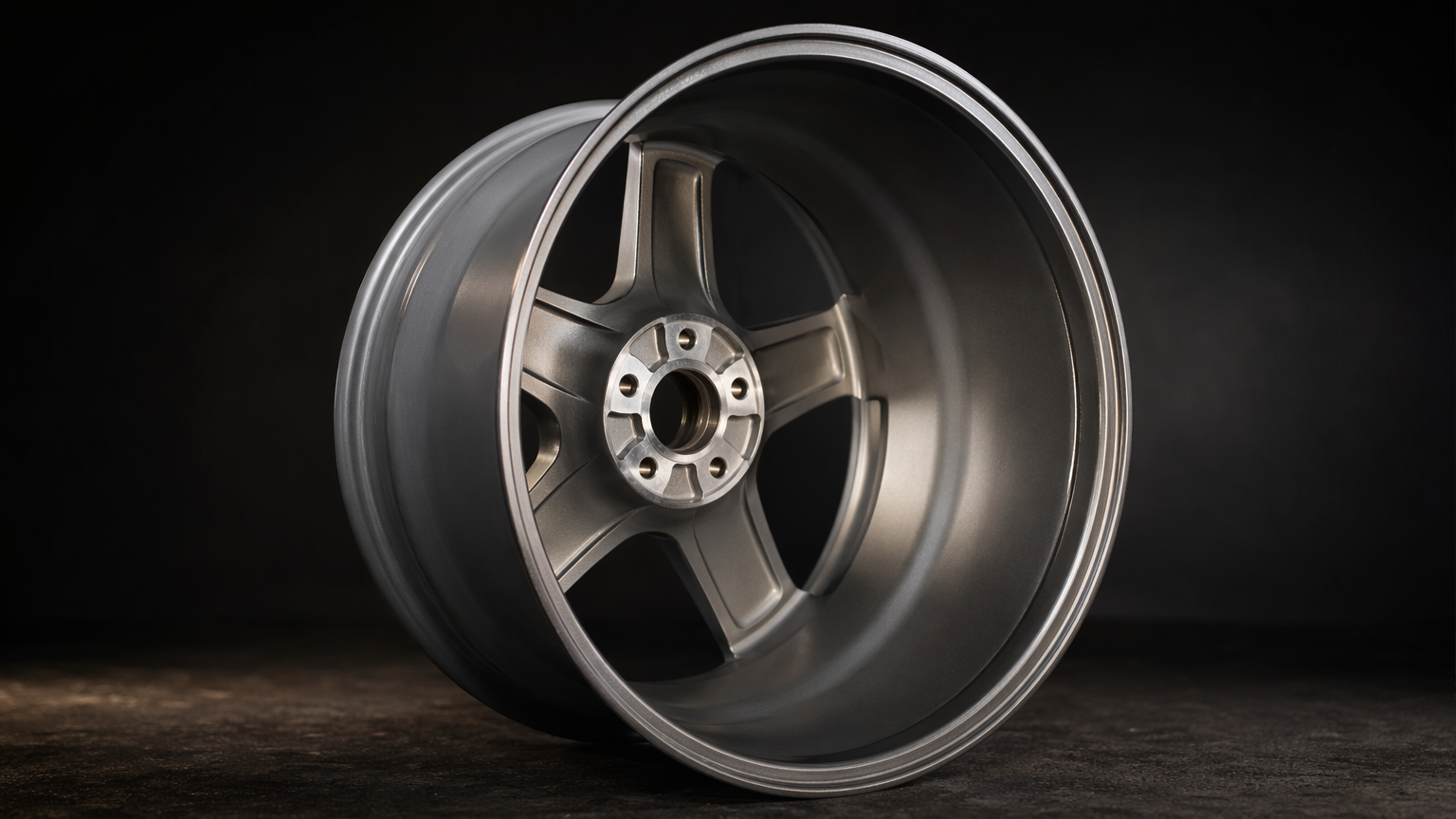
Offset is the distance (in millimeters) between the wheel's centerline and its mounting face — the flat surface that bolts to your hub. Positive offset moves the wheel inboard (toward the suspension). Negative offset pushes the wheel outboard (toward the fender). A typical stock Ford F-250 runs around +34mm offset. Most lifted builds call for -18mm to -25mm to achieve proper stance and suspension clearance. Getting this wrong by even 10mm can cause caliper interference or create a suspension bind.
Backspacing measures from the wheel's mounting face to the inner edge of the wheel barrel. It's related to offset but expressed in inches rather than millimeters and measured differently. High backspacing (e.g., 5.5") pushes the wheel inboard — risky with oversized tires because the inner tire sidewall can contact the frame, UCA, or coilover. Low backspacing (e.g., 4.5") pushes the wheel outboard. For most lifted trucks running 35"–37" tires, we typically target 4.5"–5.0" backspacing as a safe zone.
The bolt pattern specifies how many lug bolts your hub has and the diameter of the circle they sit on, written as (# of lugs) × (diameter in mm). Common patterns: Ford F-150 runs 6×135, F-250/F-350 runs 8×170, Jeep Wrangler JL runs 5×127, Toyota Tacoma/Tundra runs 6×139.7, Ram 1500 runs 5×139.7. Installing a wheel with the wrong bolt pattern is impossible to mount safely — this spec is non-negotiable. We verify bolt pattern before ordering every wheel set.
The center bore is the hole in the middle of the wheel that fits over your vehicle's hub. If this hole is smaller than your hub, the wheel physically won't fit. If it's larger (which is common with aftermarket wheels), you need hub-centric rings — precision aluminum or steel rings that fill the gap and prevent the wheel from being lug-centric, which can cause vibration at highway speeds. We include hub-centric rings on every build where the wheel bore doesn't match the hub exactly.
Wheels have load ratings just like tires, and they need to match your vehicle's GVWR. A decorative wheel built for a crossover might be rated for 1,500 lbs per corner. A properly spec'd off-road wheel for a Super Duty needs to handle 2,500 lbs+ per corner — especially if you're towing or carrying payload. We only carry wheels with appropriate load ratings for the platforms they're intended for. This is a spec that gets ignored online and matters enormously in the real world.
Wheel width determines how the tire sidewall sits — too narrow a wheel causes the tire to "balloon" and reduces steering precision; too wide can stretch the tire and create sidewall stress. Most 35"–37" off-road tires are designed to mount on 8"–10" wide wheels. Running a 12.50"-wide 35" tire on a 9"-wide wheel (common for beadlock builds) is acceptable and provides slightly better protection for the wheel rim on rocky terrain. We'll tell you the manufacturer's recommended wheel width range for every tire we sell.
Iron Ridge Off-Road verifies all six fitment specs — offset, backspacing, bolt pattern, hub bore, load rating, and width — before we order any wheel set. This isn't box-store territory. This is the level of detail that prevents expensive returns, alignment issues, and dangerous installations. Call us at (713) 555-0140 or submit a quote request above and we'll do a full fitment check on your specific vehicle at no charge.
Platform-Specific Fitment Quick Reference
These are starting-point specs we use as baselines for common Houston builds. Your actual spec depends on lift height, suspension components, and your specific build goals — but this gives you a useful reference point before your consultation.
| Platform | Bolt Pattern | Typical Offset (Lifted) | Common Wheel Size | Common Tire Size |
|---|---|---|---|---|
| Ford F-150 (2015+) | 6×135 | -12mm to -18mm | 17×9 or 20×10 | 33"–35" |
| Ford F-250/F-350 | 8×170 | -18mm to -25mm | 20×10 or 22×12 | 35"–40" |
| Jeep Wrangler JL/JK | 5×127 | -12mm to -25mm | 17×9 | 35"–37" |
| Toyota Tacoma | 6×139.7 | -12mm to -18mm | 17×8.5 or 17×9 | 33"–35" |
| Ram 1500 (2019+) | 5×139.7 | -18mm to -25mm | 20×10 | 35"–37" |
| Chevrolet Silverado 1500 | 6×139.7 | -18mm to -25mm | 18×9 or 20×10 | 33"–35" |
| Ford Bronco (2021+) | 5×127 | -12mm to -18mm | 17×8.5 | 33"–35" |
6 Common Wheel & Tire Mistakes — And How We Avoid Every One
In 12 years of building and fitting wheels and tires in Houston, we've seen the same mistakes made over and over again — usually by shops that don't specialize in lifted trucks, or by truck owners who bought online without verifying specs. Here's an honest look at what goes wrong, and exactly how Iron Ridge handles each one.
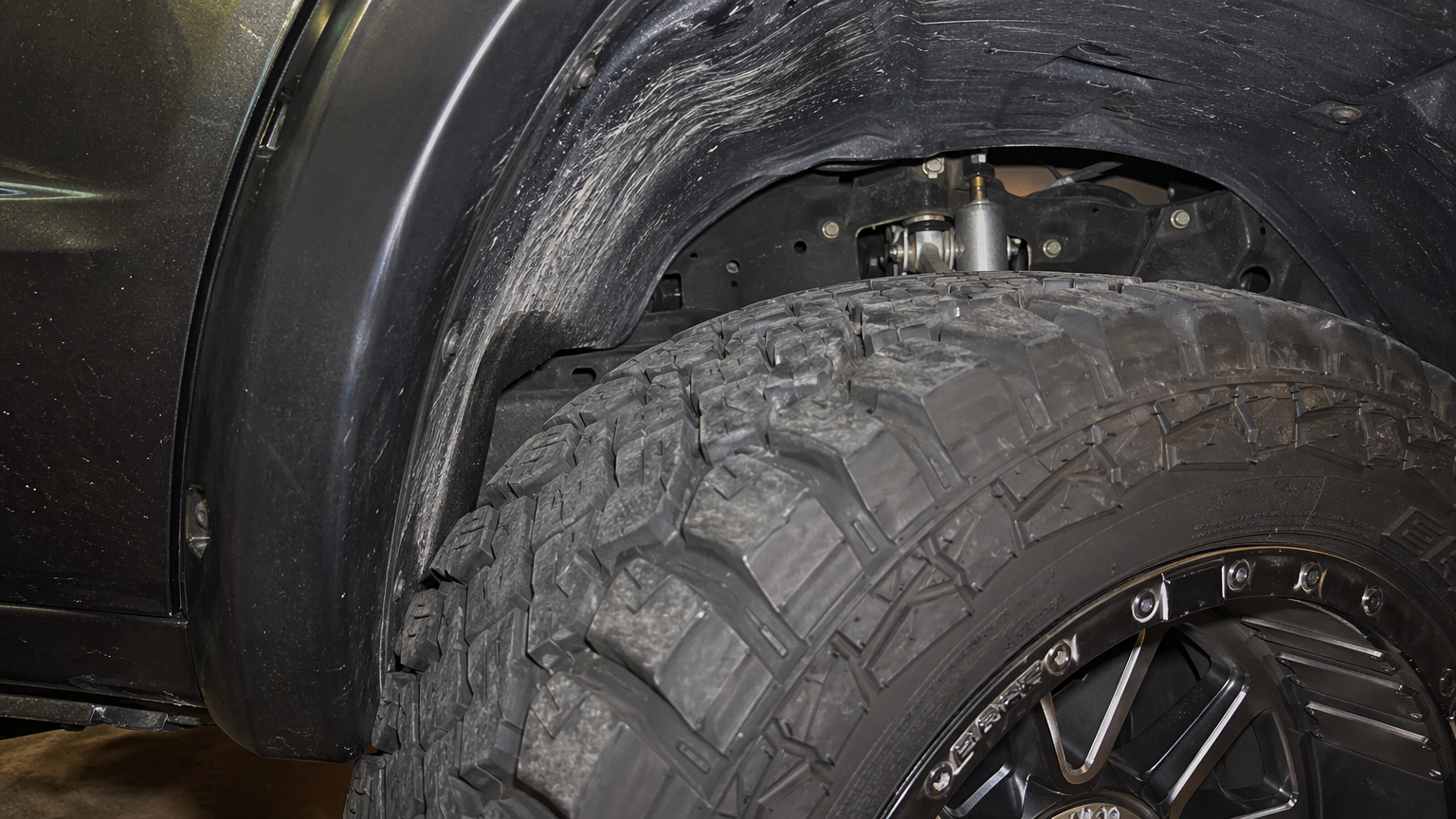
The most common fitment error we see is wheels installed with the wrong offset for the vehicle's suspension. This causes tire-to-fender rubbing at full lock, tire-to-UCA contact during suspension travel, and in severe cases, bearing wear from altered scrub radius. Many shops that don't specialize in lifted trucks will bolt on whatever fits the bolt pattern without verifying offset suitability.
Changing wheel offset and/or tire size changes your vehicle's scrub radius and can alter caster and camber angles. Installing new wheels and tires without a post-install alignment check is leaving money on the table — you'll wear your new tires unevenly within the first 5,000 miles and develop handling characteristics that make the truck pull or wander. We include an alignment check on every wheel and tire install as a non-negotiable step.
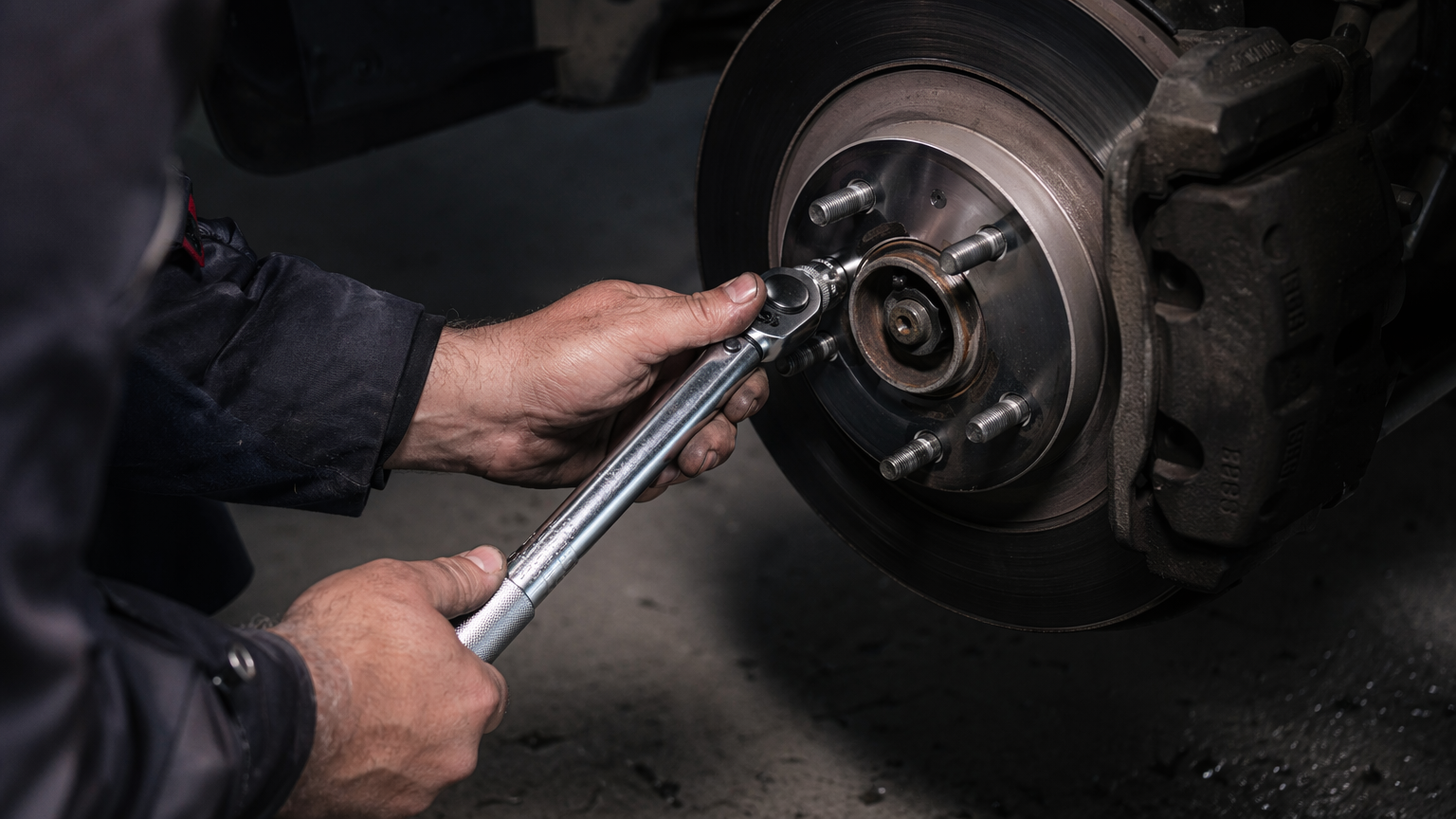
Under-torqued lug nuts vibrate loose. Over-torqued lug nuts stretch wheel studs and can cause warped rotors. The problem is compounded with beadlock wheels, where the ring bolts need to be torqued to a precise spec (typically 7–10 ft-lbs in a star pattern) to clamp the bead evenly. We see beadlock ring bolts that were hand-tightened or air-gunned on regularly — both cause de-beading risk at lower trail pressures.
New wheels almost always mean TPMS issues — either the existing sensors don't transfer cleanly to the new wheels, the new wheels aren't compatible with your sensor band style, or the sensors get damaged during dismount. Driving with a TPMS warning light on isn't just annoying — it means you have no warning system if a tire loses pressure on the highway. We handle TPMS on every install and won't hand your keys back with a warning light on.
A 12.50"-wide tire on a 7"-wide wheel creates a balloon effect — the sidewall bulges outward, which looks sloppy and reduces sidewall strength. It also affects the contact patch shape, which hurts braking and cornering traction. The general rule is that tire section width (in inches) should be matched to wheels within about 2"–3" of the recommended mounting width. We check the tire manufacturer's spec sheet against your chosen wheel width on every build.
Every inch of diameter you add to your tire makes your speedometer read slower than your actual speed — your truck thinks it's traveling less distance per wheel revolution than it actually is. On a truck going from 31.6" stock tires to 35" tires, this drift is roughly 10% — you think you're doing 65 mph while actually doing 71.5 mph. This also affects odometer mileage for warranty calculations. We inform every customer about this during the consultation and recommend tuning solutions when the size jump warrants it.
These aren't hypothetical problems — they're issues we diagnose and fix for customers every single week. When you come to Iron Ridge Off-Road in Houston TX, you're working with a team that has seen every failure mode and built our process specifically to avoid them. Our goal is that you drive away with wheels and tires that fit perfectly, handle correctly, and don't come back with problems in 60 days.
We Don't Just Bolt It On
Any shop can slide a wheel on and torque it down. We spec the full system — offset, backspacing, load ratings, TPMS compatibility — and check alignment on every install. That's what 12 years of Houston builds taught us.
We verify offset, backspacing, hub bore, and clearance before we order anything. No guesswork, no rubbing, no returns.
Every install includes professional mount, balance, and a 4-wheel alignment check. We test it on the rack before you take delivery.
Every wheel and tire package comes with our 12-month install guarantee. If something's off, we make it right — no questions asked.
We stock or can order virtually any brand. Bring us a competing quote and we'll beat it or tell you exactly why we can't.
Need your rig back fast? We offer same-day service on most in-stock setups. Book your slot online or call ahead.
We program, replace, or retrofit TPMS sensors on every build. Your dash warning light stays off and your sensors stay accurate.
Wheels & Tires in Houston, TX — What Every Truck Owner Needs to Know
If you drive a truck, Jeep, or SUV in the Houston area, you already know this city is brutal on tires. The combination of extreme summer heat, flash flooding from the Gulf, crumbling concrete on the 610 and I-10 feeders, and weekend trail runs out to Sam Houston National Forest or the Davy Crockett means your tires aren't just facing one challenge — they're facing all of them, sometimes on the same day.
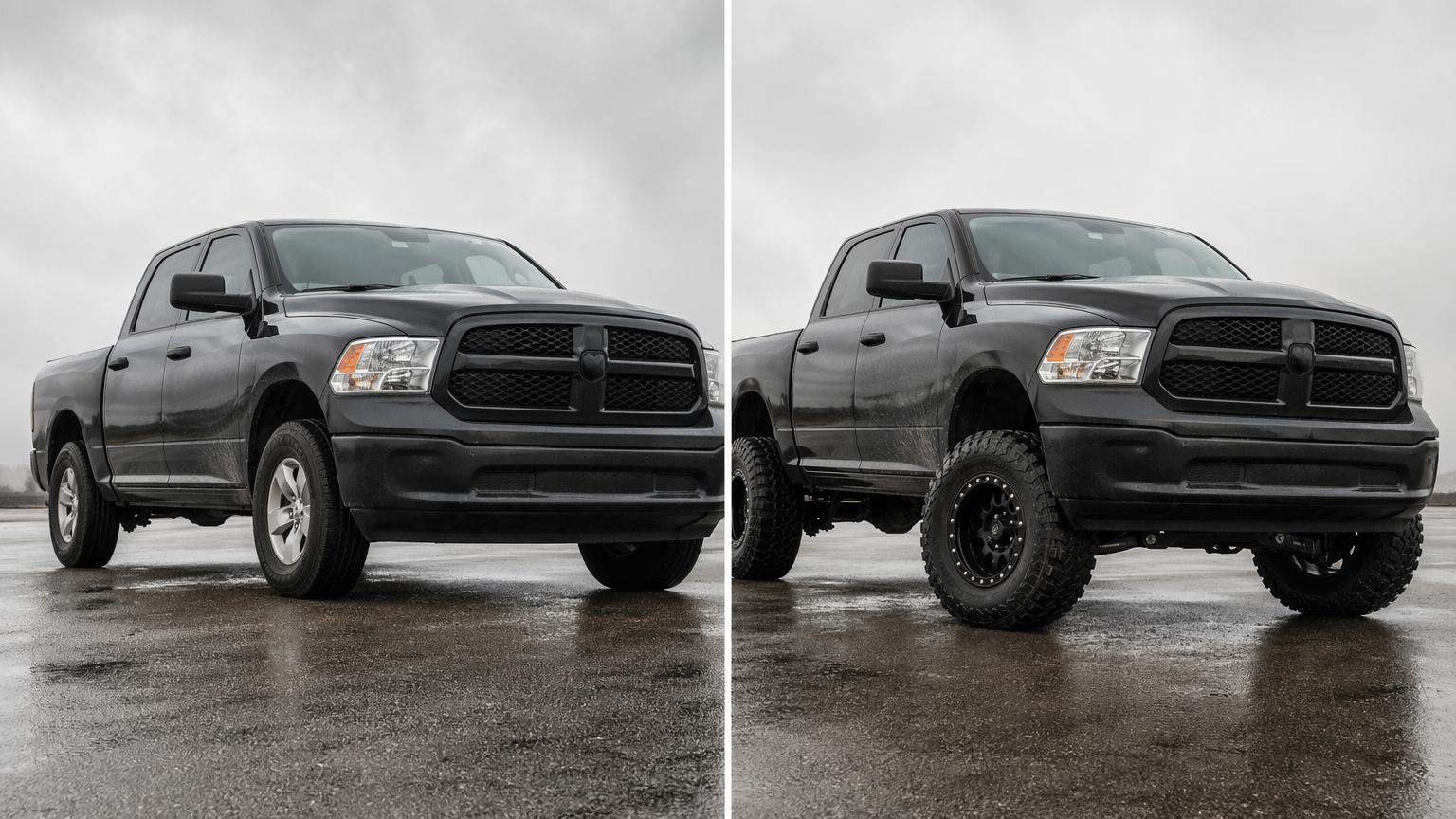
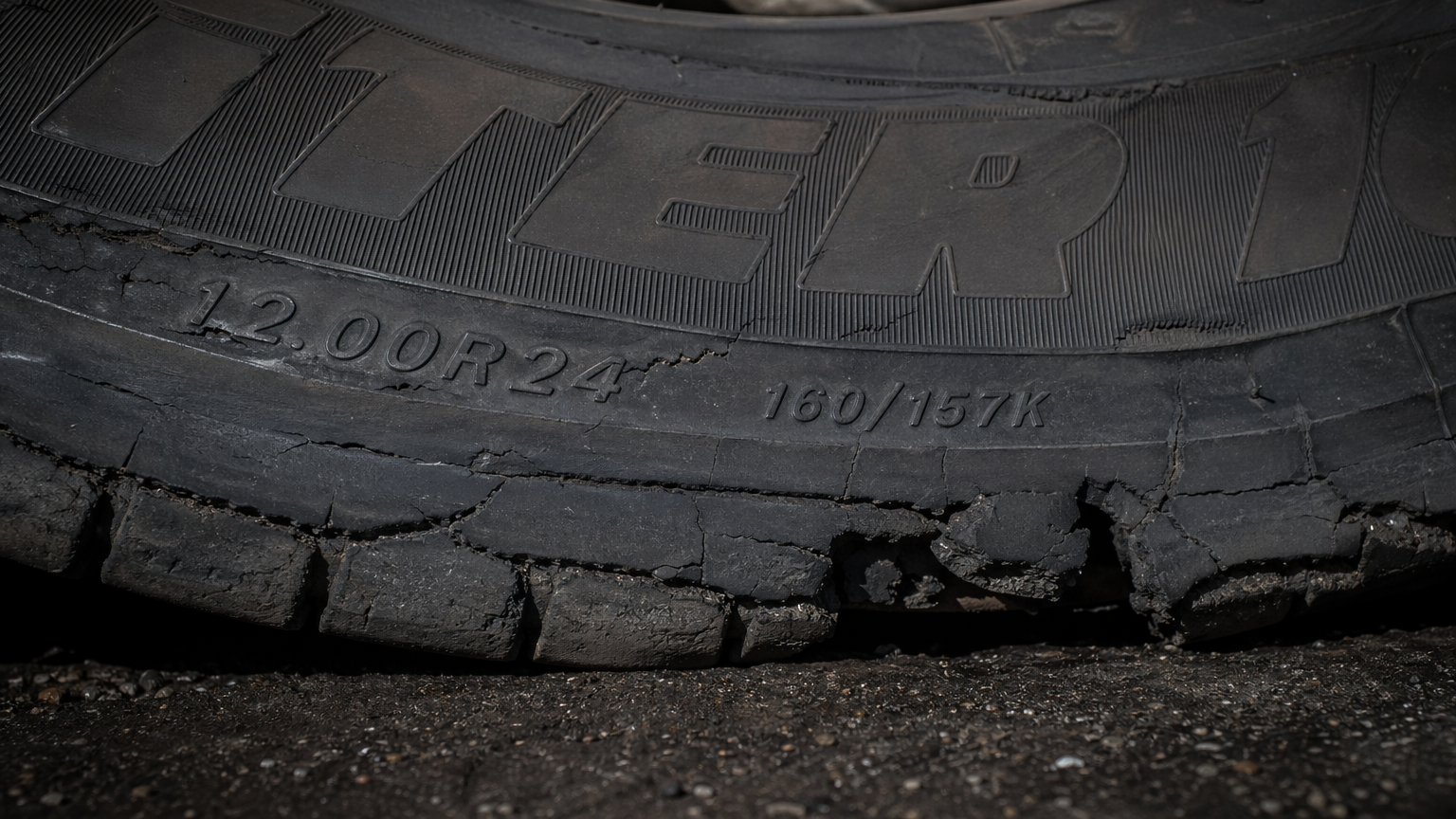
At Iron Ridge Off-Road, we've been fitting wheels and tires on Houston-area trucks and Jeeps since 2013. In that time we've learned that the tires that perform in Colorado or Arizona don't always perform here. Houston's clay-heavy soil packs into aggressive MT tread faster than most drivers expect. The summer asphalt temperatures in Houston — surface temps regularly hitting 150°F+ — degrade soft rubber compounds faster than manufacturers rate them for. And the standing water after a Harris County downpour will expose an underspecced all-terrain in a hurry.
That's why we don't just sell you a popular tire — we ask where you're actually driving and build the recommendation around your real life. A guy who runs the Navasota River trails on Saturdays and commutes 35 miles on the Hardy Toll Road every weekday needs a different setup than someone who hauls equipment to job sites in Katy and never leaves the pavement.
Looking for the best wheel and tire shop in Houston TX? Iron Ridge Off-Road at 6420 Westheimer Rd has been the Houston area's go-to for off-road fitment since 2013 — over 400 builds completed, 4.9 stars on Google, and every install backed by a 12-month guarantee. Call (713) 555-0140 for a free fitment consultation.
What separates a shop like Iron Ridge from a big-box tire store isn't just brand selection — it's the conversation that happens before we order anything. We want to know your lift height, your offset goals, your primary terrain, your GVWR, and whether you're running a leveling kit, a full suspension lift, or stock. Those details determine whether your new wheels and tires actually fit cleanly — or whether you're back in the shop six weeks later with rubbing issues, alignment wander, or a busted TPMS sensor.
Houston drivers also contend with unique regulatory considerations. Texas doesn't have hard statewide laws against lifted trucks the way California does, but Harris County inspection stations do flag obvious tire-to-fender contact, exposed tread due to inadequate fender coverage, and missing mud flaps on vehicles over certain widths. Our team knows what passes inspection here and what doesn't — so we spec your setup to be both capable off-road and completely street-legal in the state of Texas.
Whether you're based in Houston proper, Sugar Land, Katy, The Woodlands, Pearland, Friendswood, League City, Cypress, Spring, or Humble — if you're driving a truck and you want a wheel and tire setup done right, Iron Ridge Off-Road is the shop that understands the terrain, the climate, and the roads you actually drive.
Serving Houston & All Surrounding Areas
Iron Ridge Off-Road is located at 6420 Westheimer Rd, Houston TX 77057 — right in the heart of the city, easily accessible from the Galleria area, the 610 Loop, and US-59. We serve truck and Jeep owners from across the entire Greater Houston metropolitan area, including drivers who make the trip from the outlying communities because they've learned that a proper fitment job is worth the drive.
We regularly work with customers from Katy, Sugar Land, and Missouri City on the west side — areas that have seen massive truck culture growth over the last decade as suburban sprawl meets serious outdoor recreation. Katy-area drivers in particular tend to run the heaviest builds, since many of them are using their trucks for both job-site work and weekend runs out to the Colorado River or Big Bend.
From the North Houston / Woodlands / Spring corridor, we see a lot of F-250 and Tundra builds from drivers who recreate at Lake Conroe, the Sam Houston National Forest, and the Davy Crockett National Forest. These builds tend to be heavier suspension-equipped rigs that need the kind of fitment precision you can't get from a chain tire store.
The Southeast and South Houston communities — Pearland, Friendswood, League City, Webster, and Alvin — send us a lot of Jeep Wrangler and Ram 1500 builds. These drivers tend to head toward the Brazos River bottoms and the Gulf Coast marshes, environments that demand aggressive mud terrain tires and solid beadlock setups.
Customers from Baytown, Pasadena, La Marque, and Texas City on the east side represent some of our most serious industrial work-truck builds — rigs that haul equipment and need maximum load-rated wheels and tires that can handle both job-site abuse and highway commuting.
We also regularly serve customers from Conroe, Huntsville, Beaumont, and Victoria who prefer making the trip to a shop they can trust over working with local shops that don't have the off-road fitment expertise their build demands.
No matter where you're coming from in the greater Houston area, the process starts the same way: submit a quote request above, or call us at (713) 555-0140 and we'll do a free fitment consultation before you spend a dollar. We'll identify the right wheel and tire combination for your vehicle, your terrain, your budget, and your timeline — and give you a full written quote before we order anything.
Hours & Location
We're open Mon–Fri 8:00am–6:00pm and Saturday 9:00am–4:00pm. Walk-ins welcome, but we recommend calling ahead or submitting a quote request so we can have your fitment data ready when you arrive.
6420 Westheimer Rd, Houston TX 77057
Right off the 610 Loop at Westheimer — 15 minutes from downtown, easy in and out access from the 59/69 interchange.
Phone: (713) 555-0140
Why Drivers Make the Trip
We regularly hear from first-time customers that they drove past three other shops to get to us — not because we're the closest, but because of what they read in our reviews or saw in our build gallery. The reason? We do the job right the first time. We don't rush fitment. We don't skip the alignment. We don't hand back a truck with a TPMS warning light. And we back every install with a 12-month guarantee that's actually honored — not buried in asterisks.
If you're looking for a wheel and tire shop in the Houston area that treats your truck like it's their own, request a quote above or give us a call. We'll give you a straight answer and a real price — and if we're not the right fit for your build, we'll tell you that too.
Wheels & Tires FAQ
Straight answers about fitment, sizing, and what to expect from your install.