BEFORE YOU WHEEL.
We build rigs to go out. This page is about making sure you come back.
Iron Ridge has been building Houston-area trucks and Jeeps since 2013. In that time we've heard the stories — and some of us have lived them. A winch cable that snapped. A hi-lift that kicked. A recovery strap that turned into a projectile. A truck that rolled because the spotter and the driver weren't on the same page. None of it had to happen.
Most trail incidents aren't bad luck. They're the result of good people using the right gear the wrong way, or the wrong gear at all. This page exists because we'd rather spend ten minutes educating you here than hear about it later. Read it once. Share it with your crew. Then go have fun out there.
The Hi-Lift Jack — Most Useful Tool on the Trail, Most Dangerous in Inexperienced Hands
If you only own one piece of recovery gear, it should probably be a hi-lift. It's a jack, a winch, a clamp, a come-along, and a vehicle spreader all in one tool. It's also put more people in the hospital than almost any other piece of trail gear.
Here's why: a hi-lift under load stores a significant amount of mechanical energy. When something goes wrong — a worn casting, a failed mechanism, an unstable surface — that energy releases instantly and the handle goes wherever physics sends it. At full extension with a loaded vehicle, that handle can travel fast enough and far enough to break an arm, knock out teeth, or worse.
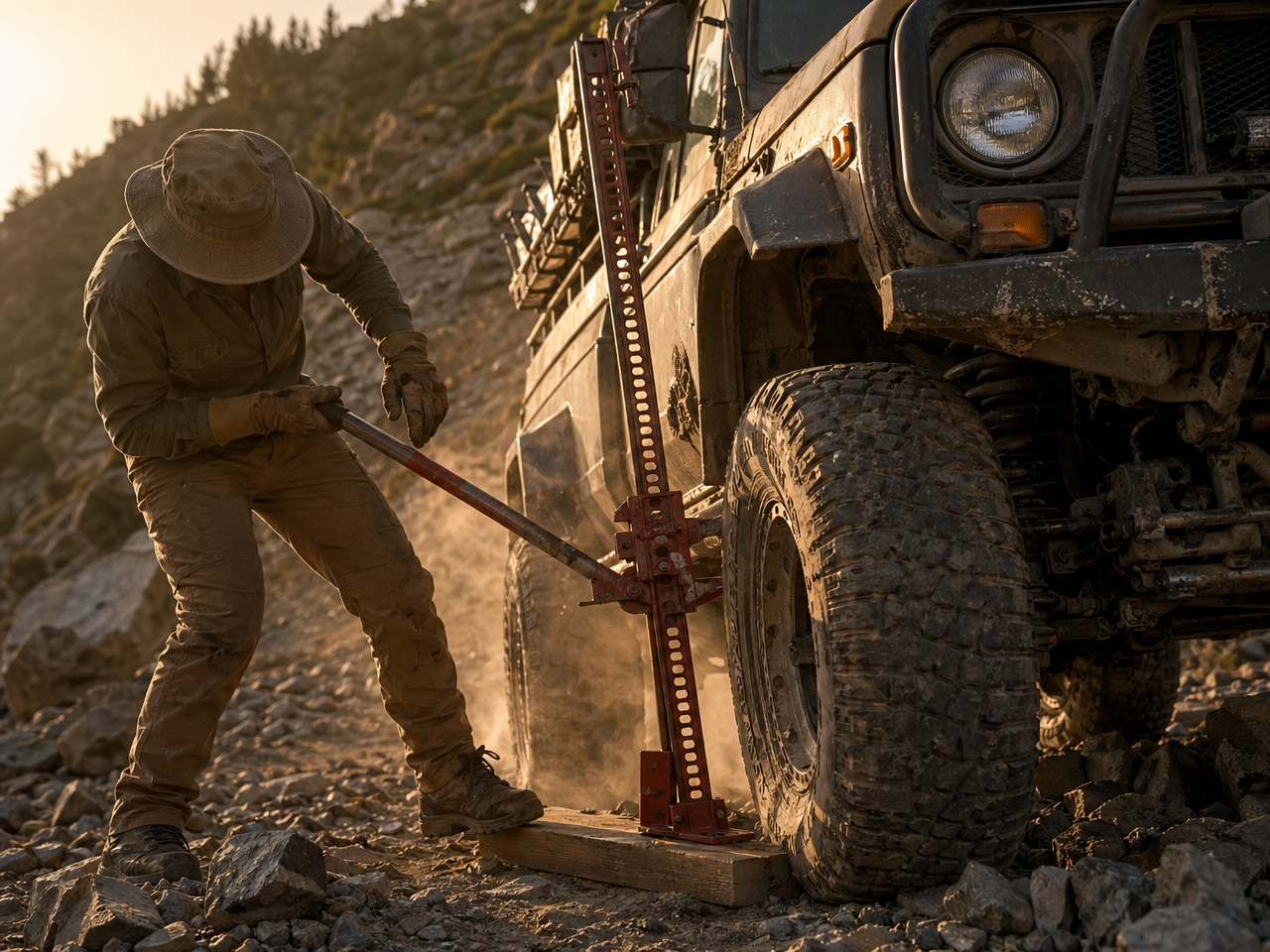
What Goes Wrong and How to Avoid It
The Foot Casting
The cast iron foot at the base wears over time, especially on rocks. A worn foot shifts under load. Inspect it before every use. If it's cracked or significantly worn, replace it — they're cheap. A casting failure under a loaded vehicle is not recoverable.
The Climbing Mechanism
The hi-lift uses a single reversible pin that engages each hole in the bar as you pump. If this pin is worn, corroded, bent, or the mechanism is gummed up with dirt and old grease, it can fail to catch under load. Keep the bar clean, the mechanism free of debris, and lightly lubricated. If the action feels sticky or inconsistent when unloaded, fix it before you need it on the trail.
The Base Surface
A hi-lift on soft ground will sink and shift. Always use a hi-lift base board — a piece of 3/4" plywood works — or at minimum a flat rock. Never operate a hi-lift on mud or loose soil without a base under the foot.
Never stand directly in line with the handle's travel arc — stand to the side, face away from the mechanism, keep bystanders back. Never use a hi-lift as a primary support under a vehicle you're working on. It is not a jack stand. People have died this way.
Winches — The Most Misused Recovery Tool in the Hobby
A winch is not a toy and it is not a substitute for driving skill. It's a last resort tool that, used correctly, can get you out of situations nothing else can handle. Used incorrectly, it can destroy your bumper, snap a tree, injure or kill a bystander, and still leave you stuck.
Synthetic Rope vs Steel Cable
Steel cable stores enormous kinetic energy under tension. When it snaps — and it will eventually snap — it doesn't fall to the ground. It travels in the direction of least resistance at high speed. A snapped steel winch cable has killed people.
Synthetic rope is lighter, safer when it breaks, easier on your hands, and floats in water crossings. It's not as abrasion-resistant as steel, so keep it off rocks when possible. The safety argument alone is worth the upgrade.
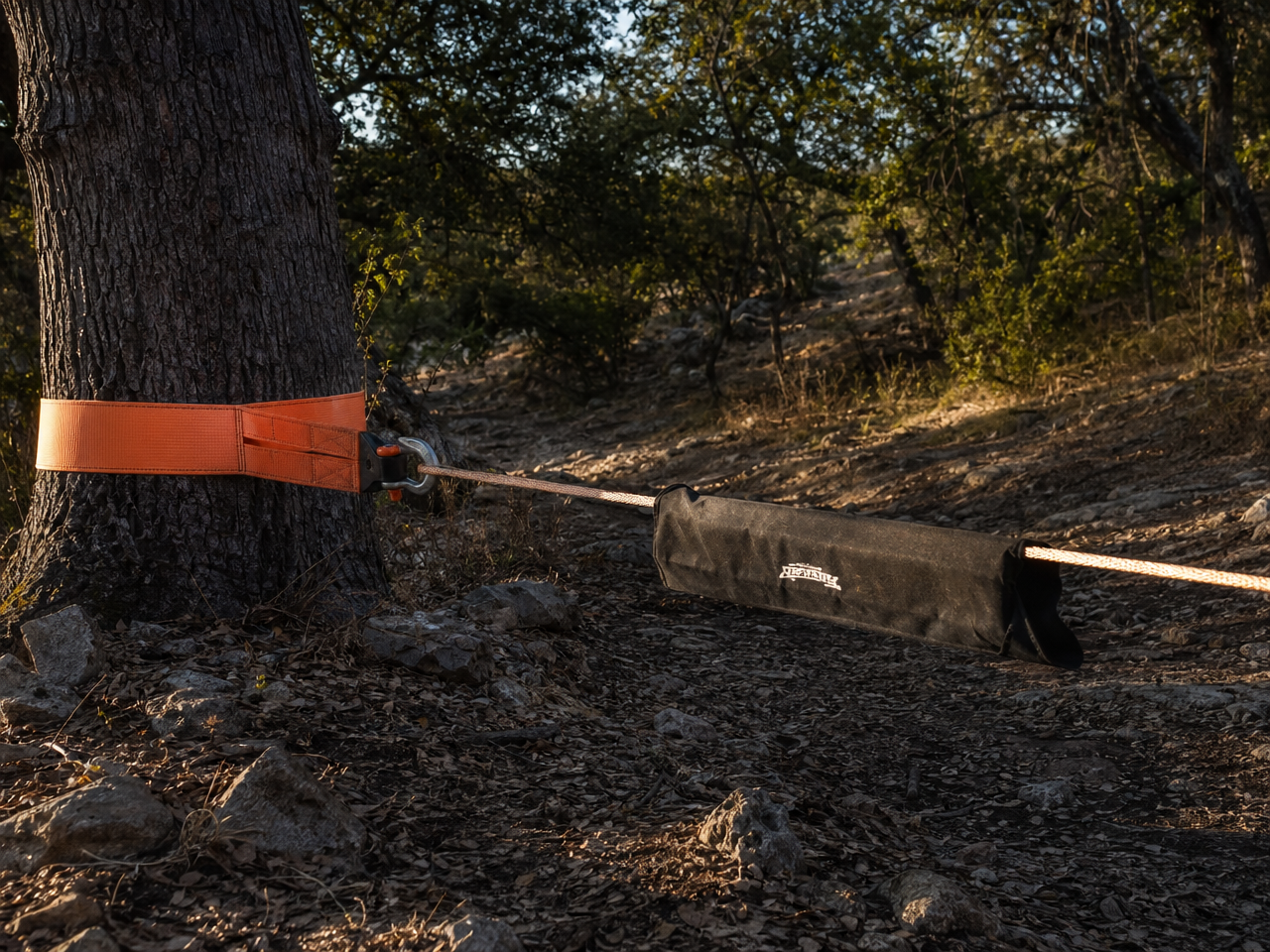
Regardless of which rope you run: always drape a dampener blanket over the middle of the line when under tension. A heavy jacket works in a pinch. If the line snaps, the dampener absorbs the energy and drops it to the ground instead of letting it travel. This is non-negotiable on a working trail rig.
Rules That Don't Have Exceptions
Never Step Over a Tensioned Line
Ever. For any reason. If you need to cross to the other side, walk around the vehicle. A tensioned winch line that parts while someone is stepping over it is not survivable.
Match Your Hardware to Your Winch
Your winch is only as strong as what it's attached to. A shackle rated for 4,700 lbs on a 9,500 lb winch will fail — and when it fails it becomes a projectile. Match every piece of hardware to your winch's rated pull. Always.
Tree Savers Every Time
Wrapping a bare winch hook or wire rope directly around a tree damages or kills the tree and can damage your line. A wide nylon tree saver strap goes between your winch line and the anchor every single time.
Clear Bystanders Before Tension
Before you apply any tension to a winch line, everyone who is not operating the winch needs to be completely clear of the line's travel path. The danger zone extends much further than most people think.
Recovery Straps, Kinetic Ropes, and Tow Straps — These Are Not the Same Thing
This one injures people regularly because the gear looks similar and people assume it's interchangeable. It is not.
Tow Strap — Rigid, No Stretch
Designed to tow a vehicle that's already free — drag it from point A to point B on a flat surface. Using a tow strap as a snatch strap transfers the full kinetic energy of the tow vehicle into the strap and then instantly into the stuck vehicle's recovery point. Bumpers get ripped off. Receiver hitches get torn from frames. People get hit by hardware at projectile speed.
Kinetic Recovery Rope — Stretch is the Point
Absorbs the energy of the tow vehicle, stores it like a spring, and releases it gradually to break the stuck vehicle free. The stretch is what makes it safe and effective for vehicle recovery. Know which one you have before you need it — they're usually color coded but read the label, don't rely on color alone.
Shackle Selection
Only use rated, load-stamped shackles for recovery. A hardware store D-ring is not a recovery shackle. Screw-pin shackles should be wired or taped so the pin can't back out under load. Bow shackles handle multi-directional loads better than D-rings.
A trailer hitch ball is not a recovery point. Under a snatch load a hitch ball can shear off and become a projectile that will go through a windshield. Use a proper rated recovery hitch receiver or a dedicated recovery point on the frame.
Spotting — The Most Underestimated Skill on the Trail
A good spotter can get a truck through a line that would otherwise end in a rollover. A bad spotter — or no spotter — is how trucks end up on their sides.
One Spotter, One Driver, One Conversation
If multiple people are shouting directions the driver has no reliable information. Designate one spotter before the obstacle. Everyone else stays quiet. This is a rule, not a suggestion.
Establish Hand Signals First
Stop, come forward, go left, go right, back up, cut wheels — agree on what these look like before anyone gets on a technical obstacle. Don't figure it out mid-line when there's 18 inches of clearance on either side.
The Spotter Has Stop Authority
If the spotter calls stop, the driver stops. No debate, no "just a little further." The spotter can see things the driver can't. The driver's ego is not more important than the vehicle or the people around it.
Eyes on the Spotter, Not the Hood
The driver's eyes should be on the spotter, not on the ground in front of the truck. Trust the spotter. That is the entire system. The moment the driver starts looking at the terrain instead of the spotter, the spotter becomes irrelevant.
Clear the Zone Behind the Vehicle
Nobody stands directly behind a vehicle on a descent or technical obstacle. If it comes back, it comes back fast and there is no warning. Clear the zone before any movement begins.
Keep Visual Contact Always
The spotter must remain visible to the driver at all times. If the spotter moves out of the driver's line of sight, the vehicle stops until contact is re-established. Never assume the driver can see you.
Fire — The One Nobody Thinks About Until It Happens
A vehicle fire on the trail is a different animal than one in a parking lot. You're not near a fire hydrant. The fire department is not three minutes away. By the time anyone responds, your rig is gone.
A dry chemical fire extinguisher mounted within reach of the driver — not buried in the cargo area under gear — is a minimum requirement for any serious trail rig. ABC rated, 2.5 lb minimum, ideally 5 lb. Mount it where you can grab it without getting out of the truck if possible.
Know where your fuel lines run relative to your exhaust. Know where your battery is and whether it's vented. Know where your recovery gear is stored relative to heat sources. If you smell burning plastic or fuel at idle on the trail, stop and find it before you keep driving. Trail fires often start small and give exactly one warning.
Communication and the Dead Zone Problem
Most Houston-area trails have cell service. Most serious trail country does not. The Hill Country, Big Bend country, and anything remote in West Texas will leave you without a signal the moment you need one.
Handheld Ham Radio
A Baofeng UV-5R or similar lets your group communicate across a line or a staging area without relying on cell service. Get your Technician license — it's a 35-question test — or at minimum know how to operate the radio in an emergency. $30 and an afternoon of studying.
Satellite Communicator
A Garmin inReach Mini means you can send an SOS from anywhere on the planet that has sky above it. If your group is doing anything remote, one of these per group is not optional. The subscription is $15/month. A helicopter rescue is significantly more expensive than that.
Leave a Float Plan
Someone back home should know your planned route, your expected return time, and who to call if they don't hear from you by a specific time. This costs nothing and has saved lives. Don't skip it because the trail "isn't that serious."
What Every Trail Rig Should Carry
This isn't a sponsored list. It's what experienced wheelers actually run. Start here and add based on where you're going and how serious the terrain gets.
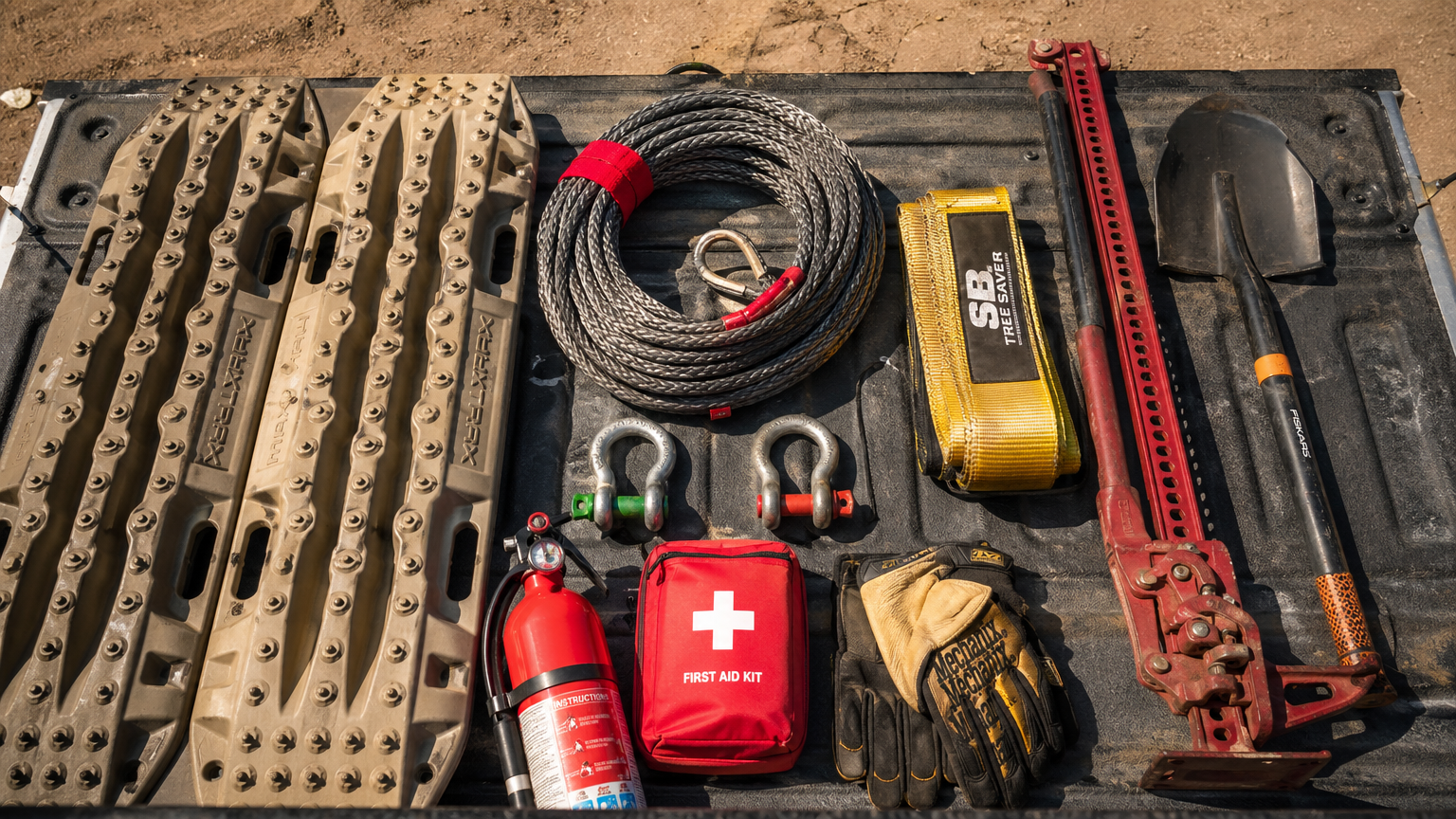
Recovery
- Hi-lift jack with base board and handle keeper
- Kinetic recovery rope rated to at least 2x vehicle weight
- Two rated bow shackles — load stamped
- Tree saver strap
- Dampener blanket or heavy jacket
- Shovel — folding military e-tool is fine
- MaxTrax or traction boards for soft terrain
Tools & Repair
- Basic hand tool set
- Tire plug kit and portable inflator minimum
- Onboard air system preferred — Viair or ARB
- Spare lug nuts for your bolt pattern
- Zip ties and electrical tape
- Duct tape
- Tow strap — for flat-ground towing only, not recovery
- Jump pack or jumper cables
Safety
- ABC fire extinguisher — 2.5 lb minimum, mounted accessible
- First aid kit with tourniquet and hemostatic gauze
- Emergency mylar blanket
- Water — more than you think you need
- Charged battery pack for phones
- Satellite communicator if going remote
Communication
- Fully charged phone before you leave pavement
- Ham radio for group trail communication
- Garmin inReach or equivalent for remote terrain
- Float plan left with someone at home
- Downloaded offline maps — don't rely on cell signal for navigation
One More Thing
The best recovery is the one you don't need. Momentum, line choice, and knowing when to back off and find a different line save more trucks than any piece of gear ever will. A trail rig is not invincible because it has a lift kit and lockers. Knowing your rig's limits — and your own — is the most important skill you can develop.
The trails aren't going anywhere. There's no trophy for the guy who pinned it through the sketchy line and broke an axle in the middle of nowhere. The win is getting out and coming back. Every time.
We can help you spec the right recovery gear, onboard air, and safety equipment as part of your build. Everything on this page — hi-lift, kinetic ropes, shackles, tree savers, fire extinguishers, onboard air systems — can be sourced and installed at Iron Ridge. Ask us about it when you request your build quote.
Go Out. Have Fun. Bring Everyone Home.
When you're ready to build the rig, we're ready to build it right. Recovery gear, onboard air, skid plates, armor — all part of the conversation.
Serving Drivers From Across Greater Houston
We build trail rigs for drivers from across the entire Houston metro. Whatever terrain you're heading toward, we'll make sure the truck is ready for it.