LIFTING A DIESEL.A DIFFERENT CONVERSATION.
Generic lift kit content applies to every truck regardless of what's under the hood. This page exists because that content is incomplete — and in some cases it will cost you money. Lifting a diesel is not the same as lifting a gas truck.
The Torque Problem
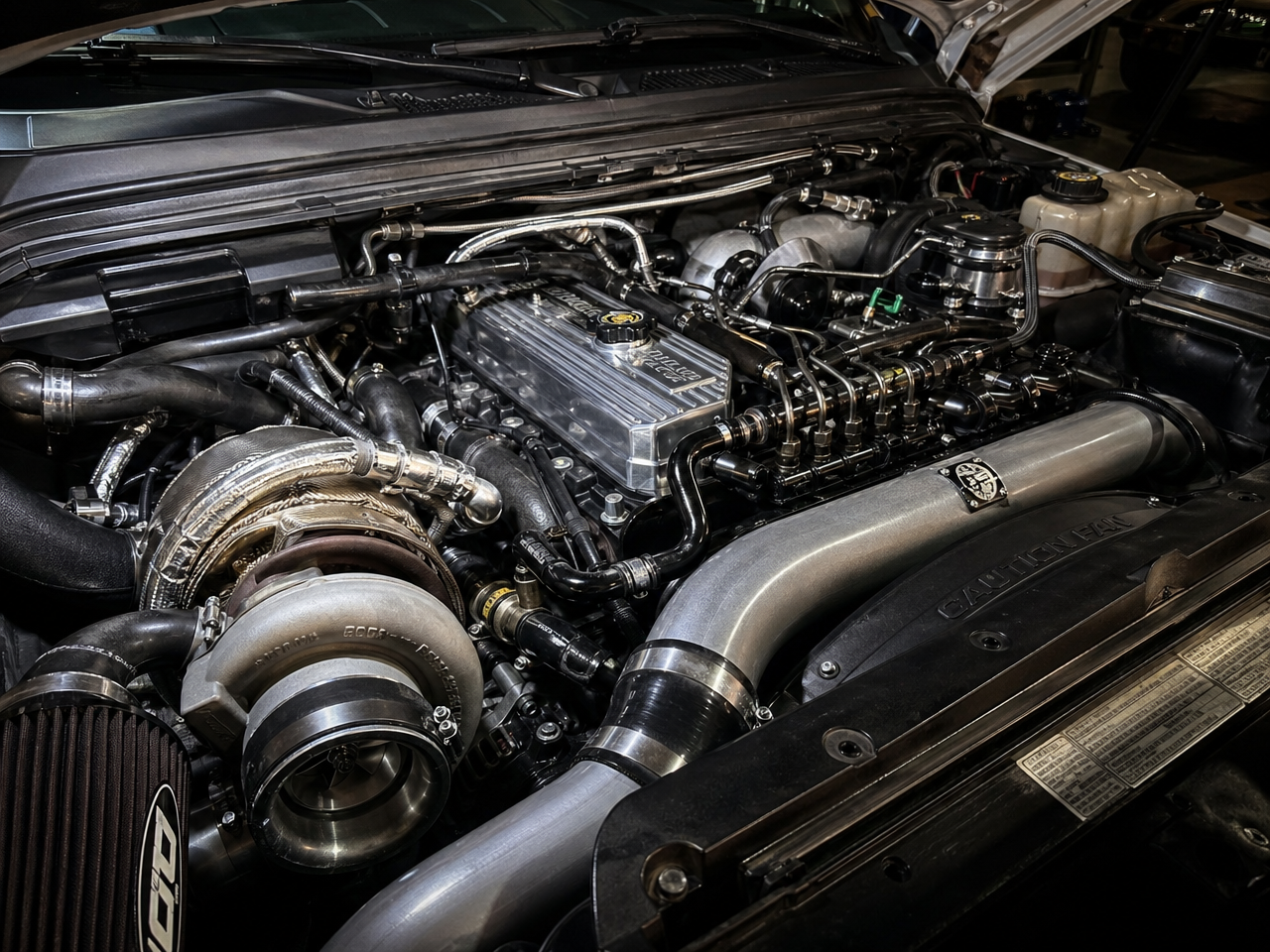
A stock 2024 Ram 3500 with the 6.7 Cummins makes 1,075 lb-ft of torque from the factory. A stock Ford F-250 with the 6.7 Power Stroke makes 1,200 lb-ft. A tuned Duramax pushing serious numbers can exceed those figures significantly.
For context — a built performance gas engine in a serious race application might make 600–700 lb-ft of torque on a good day. Your stock work truck makes more than that before breakfast.
That torque is what makes diesel trucks exceptional for towing, hauling, and pulling. It is also what makes a lifted diesel with larger tires a completely different drivetrain stress calculation than the same lift on a gas truck.
The Physics of Larger Tires Under Diesel Torque
When you put larger tires on any truck you are changing the mechanical advantage ratio between the engine and the ground. A larger tire has a larger circumference. The same amount of torque from the drivetrain now has to move a heavier, larger rotating mass through a greater arc to achieve the same vehicle speed.
On a gas truck, this mechanical disadvantage creates a noticeable performance drop — sluggish acceleration, poor fuel economy, the transmission hunting for gears. The driver feels it. They back off. The stress is interrupted.
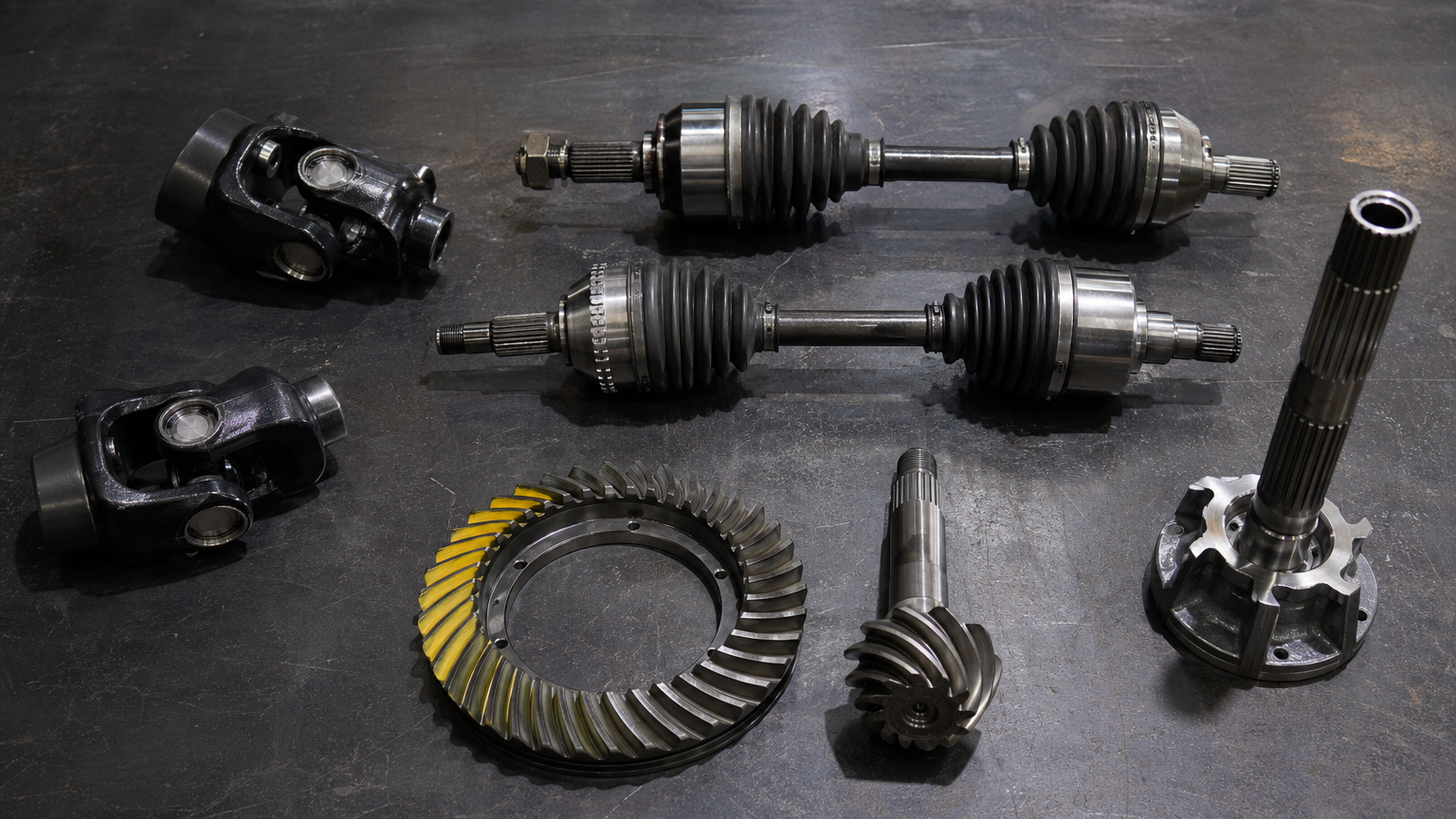
What is actually happening is that the drivetrain components — axle shafts, U-joints, CV joints, ring and pinion gears, transfer case output shaft — are absorbing significantly higher stress loads than they were designed for. The diesel engine is generating the torque to break these components. The components are the limiting factor, not the engine.
On a gas truck this situation announces itself — the engine struggles, the driver backs off, the stress is interrupted. On a diesel the driver never gets that warning. The drivetrain absorbs the load silently until something fails. Usually without warning. Usually at the worst possible moment.
What Fails and in What Order
This is the cascade that happens on a lifted diesel with aggressive tires and no drivetrain reinforcement. It does not always happen in this exact order. But these are the components that fail on this platform and they fail faster than their gas-truck equivalents under the same use conditions.
U-Joints
The first component to fail in most cases. U-joints are the weakest link in the drivetrain and they absorb the torque spike that occurs at full steering lock — which is exactly where you need them most on a trail. The combination of maximum torque delivery and maximum steering angle creates a stress concentration that diesel torque exploits quickly.
Standard factory U-joints on a diesel platform are rated for the stock tire size and the stock lift height. At 35 inches of tire, lifted suspension, and a diesel engine delivering full torque at low speed — their service life shortens dramatically.
CV Joints — IFS Platforms
Independent front suspension diesel trucks — Silverado HD, some Ram configurations — have CV joints in the front axle that are even more susceptible to diesel torque stress than U-joints. At lift height, the CV joint operating angle increases. Under diesel torque at that increased angle, the joint is working at the edge of its design envelope.
The failure mode is typically a popped CV boot followed by rapid joint wear once the grease is expelled, followed by joint failure. The warning signs are a clicking or popping sound during slow-speed turns under load. By the time you hear it consistently the joint is already damaged.
Ring and Pinion Gears
The ring and pinion is where the drivetrain's rotational force converts to the axle's rotational force. This gear mesh is the fulcrum of every torque multiplication event in the drivetrain.
Diesel torque at low RPM — which is exactly how diesel trucks spend their time on trails — creates a sustained high-load condition on the gear mesh that is more damaging than the intermittent high-load of a gas engine at high RPM. A gas engine delivering peak torque does so briefly at high RPM. A diesel delivers near-peak torque from idle, sustained, for as long as the throttle is held. The gear mesh is under that load for the entire duration of every crawling section on every trail.
Driveshaft and Carrier Bearing
Lifted suspension changes the operating angle of the driveshaft. On a gas truck this angle change creates manageable vibration that the driver feels and often tolerates. On a diesel truck the torque transmitted through that same angle creates harmonic stress that accelerates carrier bearing and slip yoke wear dramatically.
The longer the driveshaft — and on large diesel trucks the rear driveshaft is substantial — the more pronounced the harmonic effect at a steeper angle.
Transfer Case Output Shaft
The transfer case output shaft transmits all of the drivetrain's torque to the driveshafts. Under diesel torque with larger tires at crawling speed the force at this shaft is enormous. Stock output shafts on diesel platforms are designed for stock parameters. Modified parameters — lift, tire size, aggressive use — push them beyond design intent.
Output shaft failure means the truck stops moving. On a trail miles from cell service, this is a recovery situation. At highway speed it is a safety situation.
Solid Axle vs IFS — The Diesel Question
Not all diesel trucks have the same front axle configuration and the choice matters significantly for how the diesel torque problem manifests.
Solid Front Axle
The Ford F-250 and F-350 with the solid front Dana 60 axle is the most common solid-axle diesel platform. The solid axle handles diesel torque differently than IFS. The torque load distributes across the full axle housing rather than concentrating at CV joint angles. This makes the solid axle platform more forgiving of large tire sizes and diesel torque — but not immune.
The Dana 60 is a capable axle but it is not infinitely strong. On a tuned Power Stroke pushing 600+ horsepower with 37-inch or larger tires, chromoly axle shaft upgrades are a legitimate consideration — not a luxury item. The factory shafts will handle moderate use. Sustained aggressive use with serious power figures will find their limit.
The IFS-specific CV joint failure mode is largely absent. The track bar and caster correction conversation still applies, but the failure cascade starts at a higher threshold.
Independent Front Suspension
The Silverado HD and some Ram configurations run independent front suspension. This creates the full CV joint vulnerability described above, compounded by the diesel torque load.
An IFS diesel with 35-inch or larger tires, aggressive lift, and significant power output is the highest-stress configuration in this category. The front CV axles on these platforms require specific attention and the upgrade path to aftermarket heavy duty axle assemblies is well-defined — these failures are well-documented and the aftermarket has responded with solutions.
IFS platforms offer better on-road handling and a more comfortable daily driver experience. The price of that comfort is a more complex and more maintenance-intensive front drivetrain under aggressive use.
What Your Diesel Build Actually Needs
This is not a comprehensive list for every platform and every use case. It is a starting framework for the conversation.
Street and Light Trail Build
- Lift kit with geometry correction appropriate to the platform — track bar on solid axle, control arm angles on IFS
- Post-lift alignment — mandatory, non-negotiable on every platform
- Driveshaft angle assessment — many platforms acceptable at this height but marginal cases need attention
- Heavy duty U-joints — cost-effective insurance at this build level
- Regearing consideration — not always mandatory at 35 inches but worth discussing specifically
- ADAS recalibration — modern diesel trucks have the same camera and sensor systems and require the same recalibration after lift and bumper work
Serious Trail Build
Everything above plus:
- Chromoly axle shafts — at this combination of lift, tire, and diesel torque these are a necessity not an upgrade
- Upgraded CV axle assemblies on IFS platforms — not optional
- Driveshaft correction — custom length or re-phased for the new geometry
- Regearing — at 37 inches and above on most diesel platforms this is a performance and longevity requirement
- Transfer case output shaft assessment — platform-specific, worth evaluating at this build level
- Differential breather tube extensions — if you're doing trail work in Southeast Texas water crossings, factory breather locations are often too low on lifted trucks
Tuned Diesel Trail Build
Everything above plus a full drivetrain assessment before the lift.
A tuned diesel making 600+ horsepower and 1,400+ lb-ft of torque changes the failure calculus on every component in the drivetrain. We want to know what it makes before we specify anything else. A tuned diesel with big tires and no drivetrain reinforcement is a parts cannon. The engine will find every weak link and exploit it.
We would rather have the conversation about reinforcing those links before the build than after the first trail day.
The Emissions Reality
We are going to say this clearly because it affects how we approach the build conversation with every diesel customer.
Diesel emissions equipment — the DPF, DEF system, and EGR system — is federally mandated on all street-driven diesel vehicles. Deleting or bypassing these systems on a street-driven vehicle is a federal EPA violation. The fine structure for individuals and shops that perform emissions deletions on street vehicles is significant and enforcement has increased in recent years.
We do not perform emissions deletions on street-driven vehicles. If you are building a dedicated off-road diesel that will never be driven on public roads we will have a different conversation. If your truck is street-driven it stays emissions compliant.
This is not a limitation we apologize for. It is a boundary that protects you and us.
A performance tune that operates within the emissions system — optimizing fueling, timing, and boost while maintaining DPF and DEF function — is legal, available for most platforms, and produces meaningful results. We work with reputable tuners who understand the distinction and operate within it.
The Diesel Community in Houston
Houston has one of the largest diesel enthusiast communities in the country. This is not accidental — the oilfield culture, the ranch culture, the contractor culture, and the performance diesel scene all converge in this market in a way that does not exist in most cities.
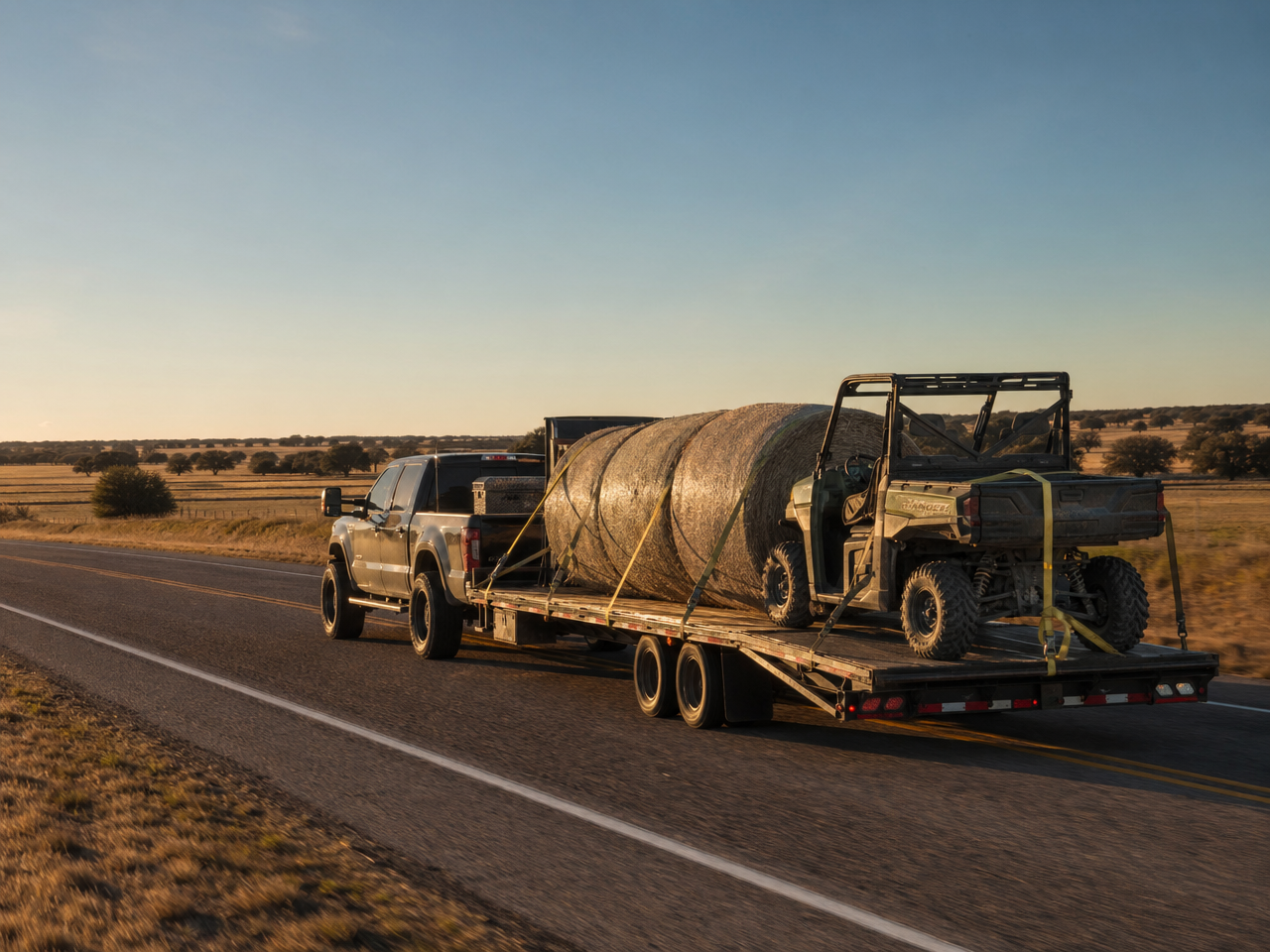
The diesel truck that does everything — tows the trailer, pulls the boat, takes the family to the coast on weekends, and handles serious trail terrain when it needs to — is a specifically Texas vehicle. Building that truck correctly requires understanding the demands it will face across all of those uses simultaneously.
Serving Diesel Owners Across Greater Houston
We build and service diesel trucks for owners across the Houston metro — oilfield, ranch, contractor, and enthusiast. Whatever you're using it for, we'll build it for that use.