DEATH WOBBLE.WE FIX THE CAUSE.
A violent shake that starts around 45–55mph and doesn't stop until you slow down. That's death wobble. It's not a shimmy. It's not normal vibration. And it doesn't fix itself — but every single cause is diagnosable and fixable.
Important: A steering stabilizer does not fix death wobble. If a shop diagnosed your wobble and sold you a stabilizer, the problem will come back. Here's why — and what actually fixes it.
What Death Wobble Actually Is
Death wobble is a violent self-reinforcing oscillation in the front axle assembly. It typically initiates between 45–70mph — often triggered by a bump, a groove in the pavement, or a lane change — and once it starts it amplifies until you slow down below the threshold speed.
It's not a mystery. It has specific causes and every one of them is diagnosable.
If your truck is on this list and you've felt it, you're not imagining it. And you're not the first.
What Actually Causes It
Death wobble has a reputation for being mysterious. It isn't. Here are the specific causes — every one of them diagnosable before we touch anything.
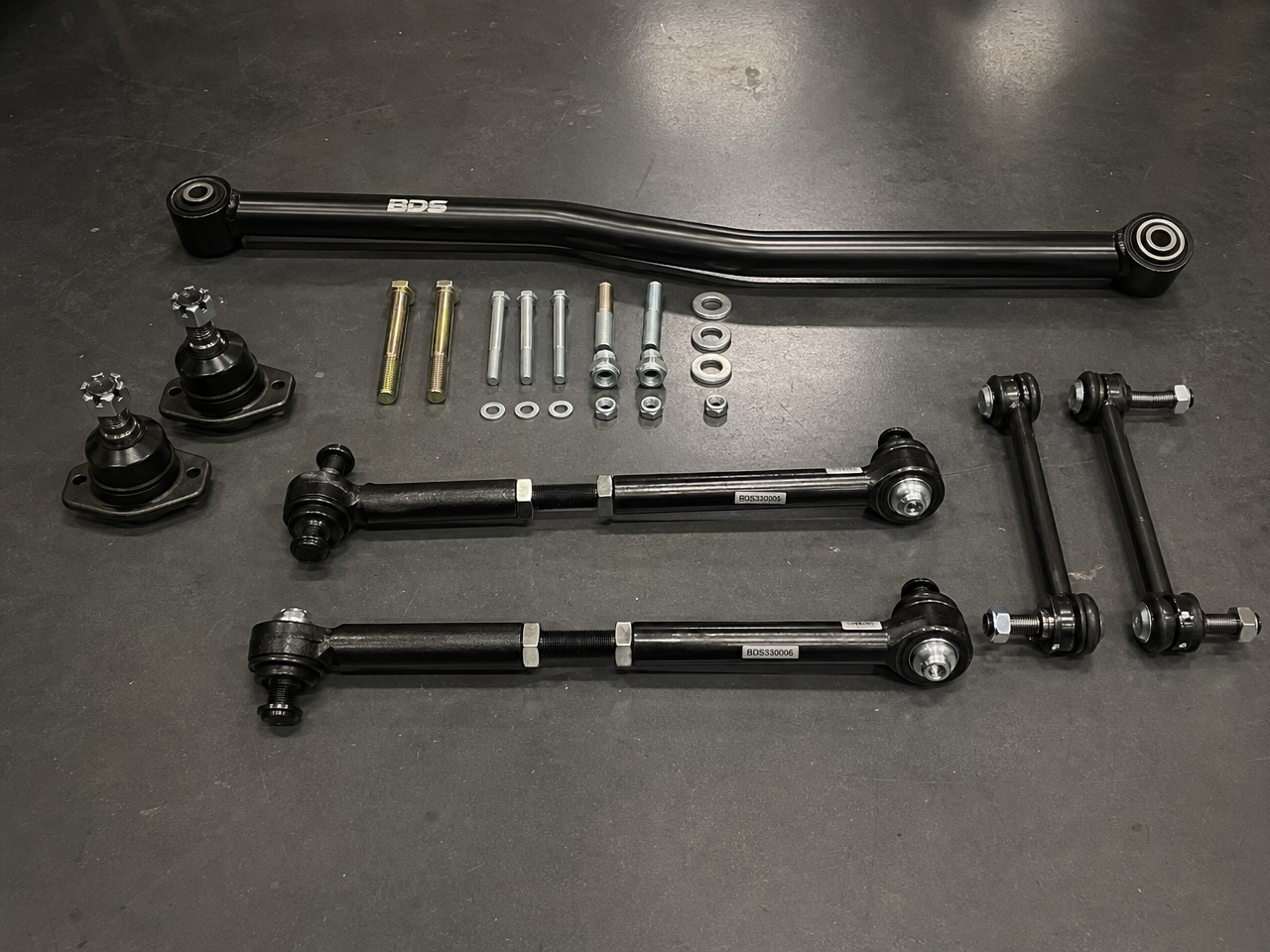
Track Bar Geometry
The track bar locates the front axle laterally. On a stock vehicle the geometry is designed to work within a specific range of suspension travel. When you lift a vehicle the angle of the track bar changes. If that geometry isn't corrected — with a drop bracket, an adjustable track bar, or both — the axle develops lateral movement under load at highway speed.
That lateral movement is what starts the oscillation.
Shops that sell a lift kit without addressing track bar geometry are leaving a loaded spring in your front end. It will go off eventually. A steering stabilizer will not fix it — it will mask the symptom temporarily until the stabilizer wears out or the underlying problem gets worse.
Worn Ball Joints
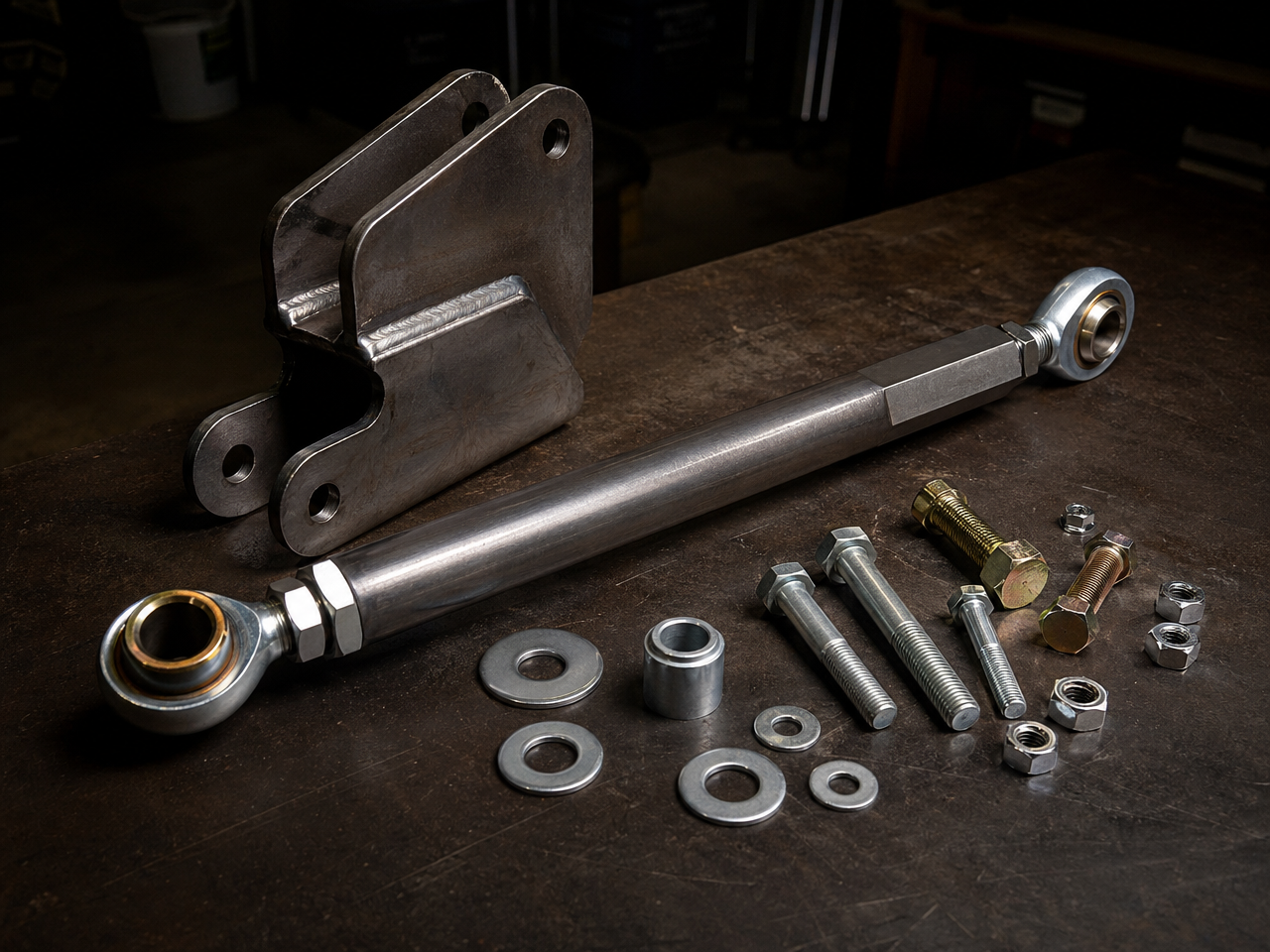
Death wobble accelerates ball joint wear. Worn ball joints cause death wobble. Once this cycle starts it feeds itself.
If a vehicle has been wobbling for any length of time the ball joints are the first thing we inspect. Even if they weren't the original cause they're almost certainly part of the problem by now.
Loose or Worn Tie Rod Ends
Any play in the steering linkage amplifies oscillation once it begins. Tie rod ends are wear items on any vehicle — on a lifted truck running larger and heavier tires they wear significantly faster than stock. A tie rod end that would last 80,000 miles on a stock truck might need attention at 40,000 on a modified one.
Improper Caster Angle
Caster is the angle of the steering axis relative to vertical. It's what gives a vehicle straight-line stability and the tendency to self-center after a turn. Lifting a vehicle without correcting caster angle changes how the front axle tracks at speed — and makes it far more susceptible to oscillation when something disturbs it.
Many budget lift kits do not include the caster correction components necessary to restore proper geometry. Bolting them on and calling it done is not a complete install.
Improper or Unbalanced Tires
Running tires too large for the lift geometry, poorly balanced tires, or tires with a flat spot from extended storage all compound every other issue on this list. A tire imbalance that would be unnoticeable on a stock truck can trigger wobble on a truck with compromised front end geometry. Tire size and lift height are not independent decisions.
The Steering Stabilizer Misconception
Shops that diagnose death wobble and sell a replacement steering stabilizer as the solution are selling a band-aid on a problem that will come back — usually worse.
If you've already replaced your steering stabilizer and the wobble came back, this is why. The stabilizer wore out or the underlying problem progressed. The cause was never addressed.
Bring it to us. We will inspect the actual front end geometry and component condition, tell you exactly what's causing it, and quote you the real fix. No stabilizer upsell. No band-aid.
The Cheap Lift Problem
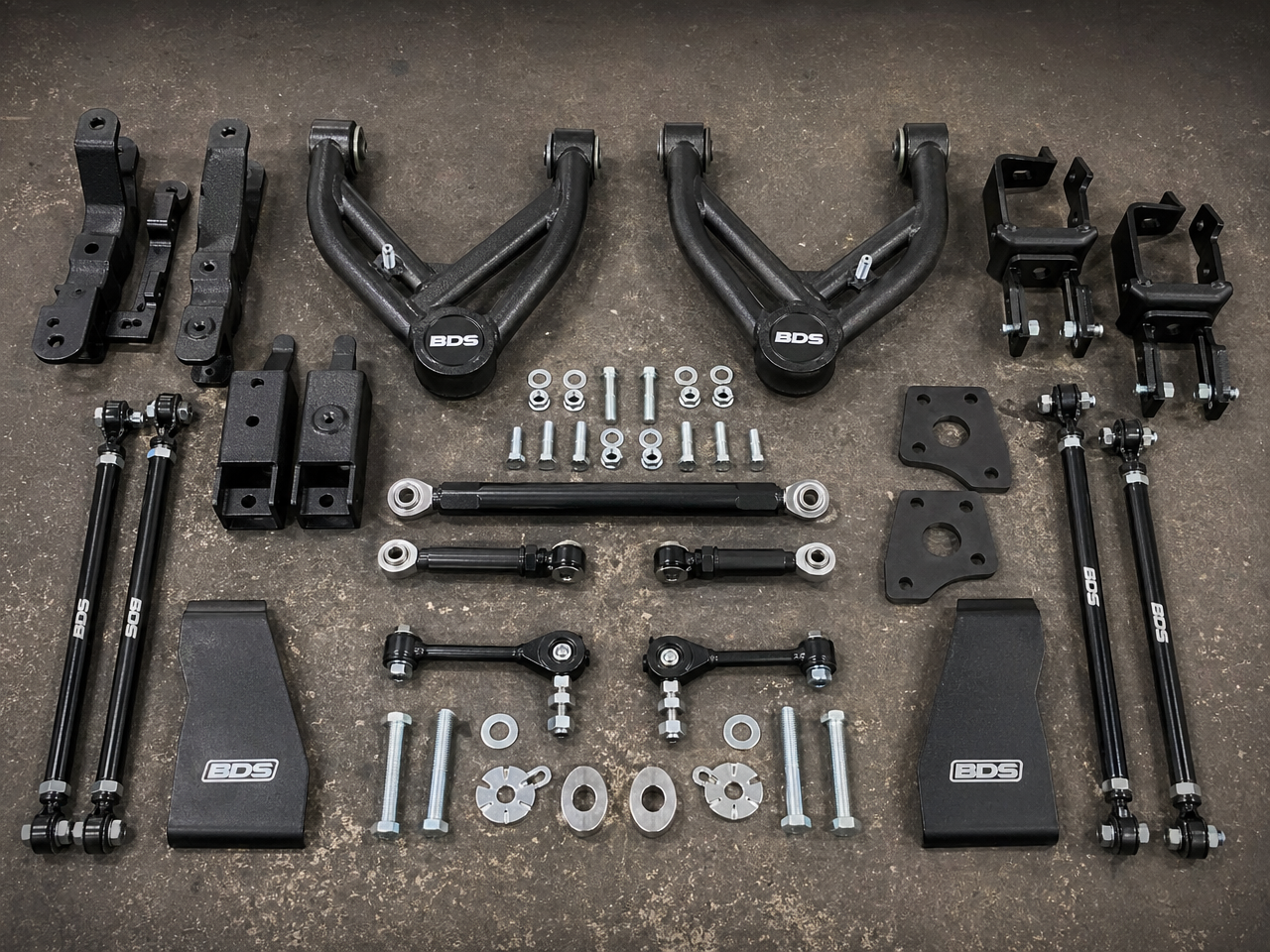
A lift kit is not just a set of spacers or blocks. It changes the geometry of every component connected to the front axle. Track bar drop brackets, extended sway bar end links, upper control arms, caster correction cam bolts and plates — these components exist because lifting a vehicle without addressing geometry creates handling and safety problems at highway speed.
A shop that sells you a $600 lift without these components is not saving you money. They are saving themselves money. The difference in cost gets transferred to you as risk — and sometimes it shows up at 65mph on the freeway with your family in the truck.
We don't do that. If a customer's budget doesn't cover a proper install we have that conversation before we start — not after. We adjust the build plan or we tell them to wait until the budget is there. We will not send a truck down the highway with a geometry problem we created.
How We Diagnose It
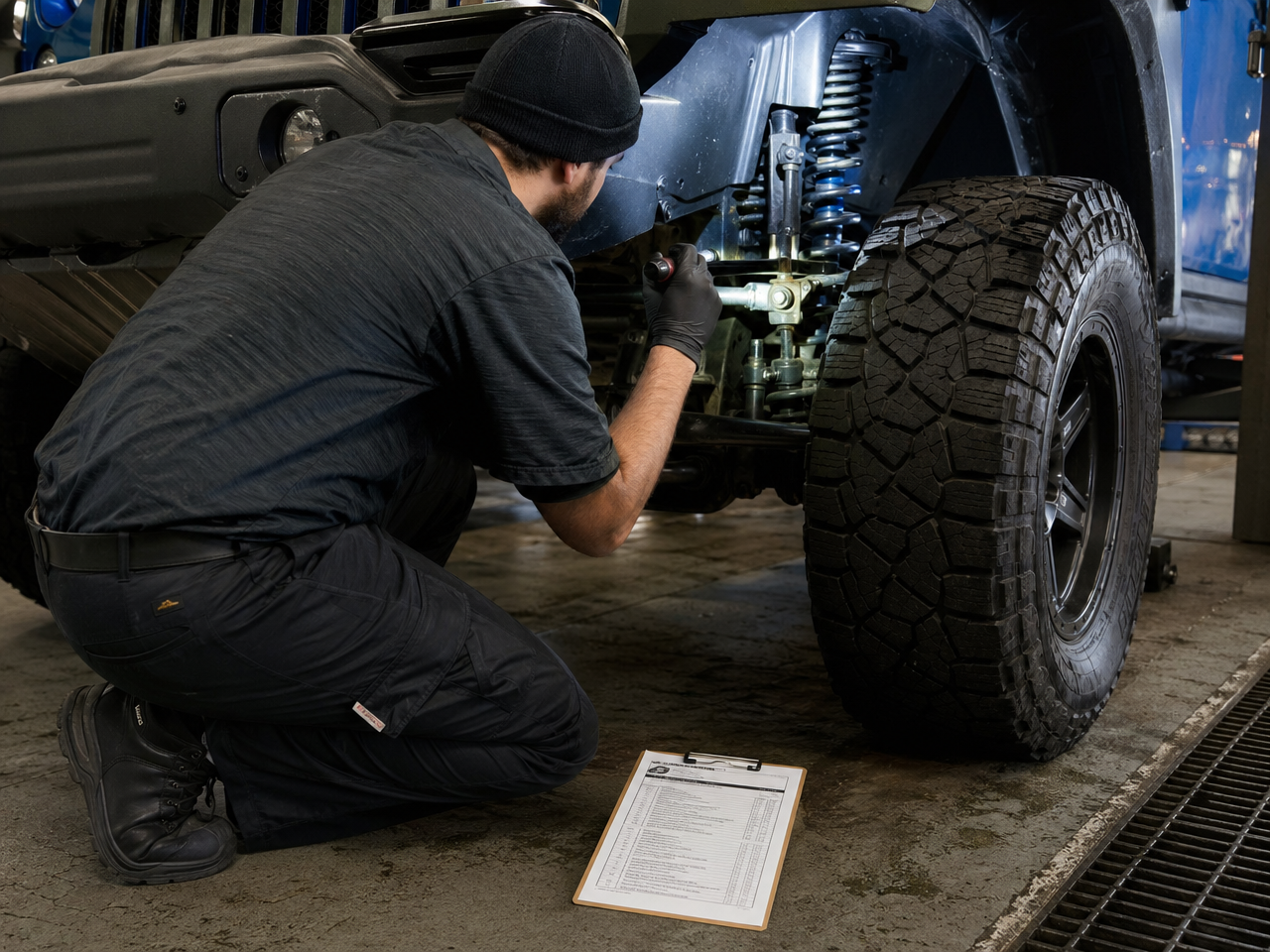
When a truck comes in with a death wobble complaint here's what we do — before we touch anything.
Full Front End Inspection
Track bar and drop bracket condition, ball joint wear, tie rod end play, wheel bearing condition, control arm bushings, sway bar links and end links. Every component that touches the front axle gets checked.
Geometry Assessment
We evaluate the current lift height against the tire size and assess whether the geometry corrections necessary for that configuration are actually in place.
Test Drive
We confirm the trigger speed and behavior before we touch anything. We want to understand exactly what we're dealing with — not guess from a parking lot inspection.
Written Diagnosis
Before any work is authorized you get a written explanation of what we found and what it takes to fix it. No surprises on the invoice. No work starts without your approval.
How We Fix It
We fix the cause — not the symptom. Depending on what the diagnosis reveals, that may include any combination of the following:
- Track bar drop bracket installation or adjustable track bar replacement
- Ball joint replacement (one side or both)
- Tie rod end replacement
- Caster correction components
- Tire balance inspection and correction
- Upper control arm upgrade where geometry requires it
- Wheel bearing replacement where warranted
- Full post-repair highway test drive before release
How We Prevent It on New Builds
Every lift install we do starts with a geometry assessment. We spec the correct components for the lift height, tire size, and platform before we quote the job. The track bar solution, the caster correction, the control arm considerations — these are part of the quote, not line items we add after the fact.
If a budget requires a compromise, that conversation happens before we start. We don't install half a lift and hand you the keys hoping you won't notice. This is how lifts are supposed to be done. It's how we've always done them.
Serving Drivers From Across Greater Houston
Our shop serves Jeep and truck owners from across the Houston metro. If you're dealing with death wobble, we've seen it from your zip code before.