Death Wobble After Lift.
A lift kit done correctly does not cause death wobble. What causes death wobble after a lift is the geometry correction that wasn't made — the track bar angle left wrong, the caster left uncorrected, the alignment done at a shop that didn't know what it was looking at. If you developed death wobble after your lift, the lift is not the problem. The installation is. We find it. We fix it.
Jeep Death Wobble After Lift: Track Bar Geometry Is Almost Always the Answer
Here is the thing that most people who come to us with post-lift death wobble don't know: the lift kit itself didn't break your truck. What broke your truck is a geometry correction that was either skipped entirely, or done with the wrong parts. And the most common one — by a wide margin — is the track bar angle. This applies to full lift kits and to leveling kits alike — any change in ride height can trigger the same geometry problem.
On a solid-axle vehicle (Jeep Wrangler, Cherokee, older Ford Super Duty, Ram 2500), the track bar locates the front axle laterally. The factory track bar is designed to run at a near-horizontal angle when the vehicle is at stock ride height. Lift the vehicle 2.5 inches or more, and the track bar now runs at a steep angle — axle end low, frame end high. In this position, movement of the track bar under load shifts the axle sideways. That sideways shift is what initiates the oscillation. At speed, over a bump, you hit the trigger and the whole front end goes into resonance.
The fix is not a steering stabilizer. The fix is a track bar drop bracket that lowers the frame-end mount, restoring the correct horizontal angle — or an adjustable track bar that lets you set the angle precisely. Once the geometry is right, the trigger point for oscillation disappears. Death wobble doesn't come back because the condition that caused it has been corrected, not suppressed.
Replacing or upgrading the steering stabilizer on a truck with bad track bar geometry will reduce symptoms — temporarily. The stabilizer is a damper. It resists movement. But it can't eliminate the geometry condition that's driving the oscillation. Once the stabilizer wears out or the geometry problem progresses, the wobble returns. We won't recommend a stabilizer as a standalone repair on a truck with uncorrected geometry. It's not a fix.
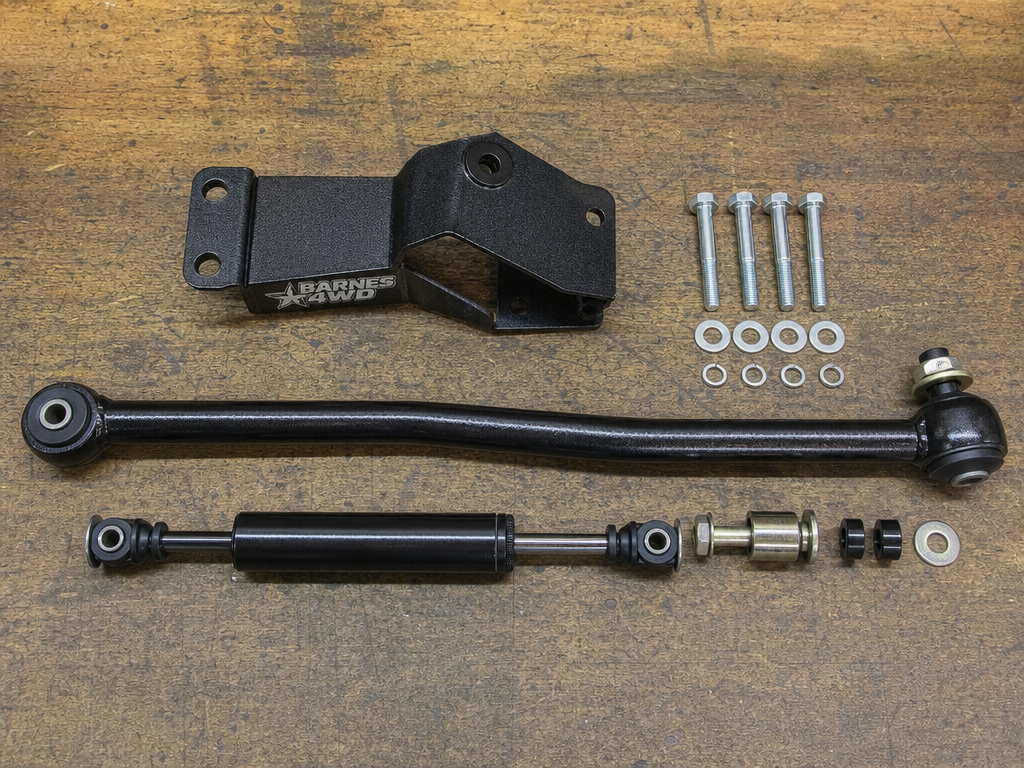
Control Arm Geometry After Lift: The Four Things That Actually Cause It
Post-lift death wobble has a short list of causes. They can stack — more than one present at the same time — but the list itself doesn't change. Here's what we inspect before we touch anything.
Track Bar Angle
The single most common cause of death wobble on lifted solid-axle vehicles. When the track bar runs at too steep an angle, axle lateral movement under load becomes the wobble trigger. A drop bracket or adjustable bar is the correct fix — not a larger stabilizer, not new tie rods.
Caster Not Corrected
Lifting without correcting caster pulls the front axle's center line backward relative to the steering axis. The result is a truck that tracks poorly at speed and is far more susceptible to oscillation when a trigger event happens. Caster correction requires cam bolts, correction plates, or aftermarket control arms — not just an alignment.
Worn Components
Ball joints, tie rod ends, and wheel bearings all wear faster on a lifted truck running larger tires. Any play in these components amplifies oscillation. A rig that was lifted correctly but never maintained can develop wobble as components wear to the point where their slack allows the resonance to build. Inspection reveals the actual condition.
Tire Balance & Condition
Imbalance that's unnoticeable on a stock truck becomes a wobble trigger on a lifted rig with geometry already under stress. We check tire balance and inspect for uneven wear before concluding a component diagnosis. A wobble trigger that's this inexpensive to fix should be confirmed or ruled out early in the process.
Post-Lift Death Wobble Diagnostic: The Right Order of Operations
Diagnosis before repair — every time, no exceptions. Here is the exact sequence we run on every post-lift death wobble vehicle before a single part is quoted.
-
1
Lift History & Geometry Review
We start with what was installed and when. Track bar correction — present or absent? Caster correction components — present or absent? Alignment performed post-lift? By whom? This takes ten minutes and frequently identifies the root cause before the truck goes on the lift.
-
2
Track Bar Inspection
Physical inspection of the track bar angle at current ride height. We check for a drop bracket or adjustable bar, verify the bar's angular position, inspect bushings for wear, and check end play. If the bar is running steep and there's no drop bracket, we have the primary cause.
-
3
Control Arm & Caster Check
Control arm condition and angle review — is caster within spec for the lift height? Do the upper or lower arms have appropriate geometry for the installed lift? We look for factory arms on trucks lifted beyond their correctable range, and for aftermarket arms that were installed without a proper alignment following.
-
4
Component Wear Inspection
Ball joints front and rear (where applicable), tie rod ends, drag link, wheel bearings. Any detectable play in these components gets noted and quoted. We don't flag parts that don't need replacement — and we don't skip parts that show wear because the geometry issue is already identified.
-
5
Tire Balance & Condition Check
Tire balance verification on all four corners, inspection for uneven wear patterns that indicate existing alignment problems. Done before repair so we can identify secondary contributors and address them at the same visit.
-
6
Written Diagnosis & Repair Authorization
Every finding is documented in writing — root causes identified, parts required, labor scope. Nothing is ordered or installed until you've reviewed and approved the written diagnosis. Then we fix it, align it, and road-test it before it leaves the shop.
The Honest Death Wobble Fix After Lift Kit
The honest fix is geometry correction, component repair, and a proper post-repair alignment. In that order. Not a steering stabilizer first. Not a parts-swap guessing game. Not a quoted part list generated before anyone looked at the truck.
For most post-lift wobble cases we see in Houston, the repair involves one or two of the four causes above — rarely all four simultaneously. The most common repair is a track bar drop bracket or adjustable track bar, plus a full alignment with caster set to spec. If ball joints or tie rod ends are worn, they're replaced at the same time — because worn components on a truck with corrected geometry will trigger wobble just as reliably as the geometry problem did.
We don't offer a "death wobble special." We offer a diagnosis, a written repair scope, and work done to fix what's actually wrong. If your wobble came from a lift that was installed elsewhere, we're not interested in blaming that shop — we're interested in fixing the truck and sending it out driving the way it should.
Every post-wobble repair at Iron Ridge includes a post-repair road test — not just a quick pull out of the bay. We take the truck to highway speed, verify the wobble is gone, and check alignment pull. If anything's off, we address it before the vehicle leaves.
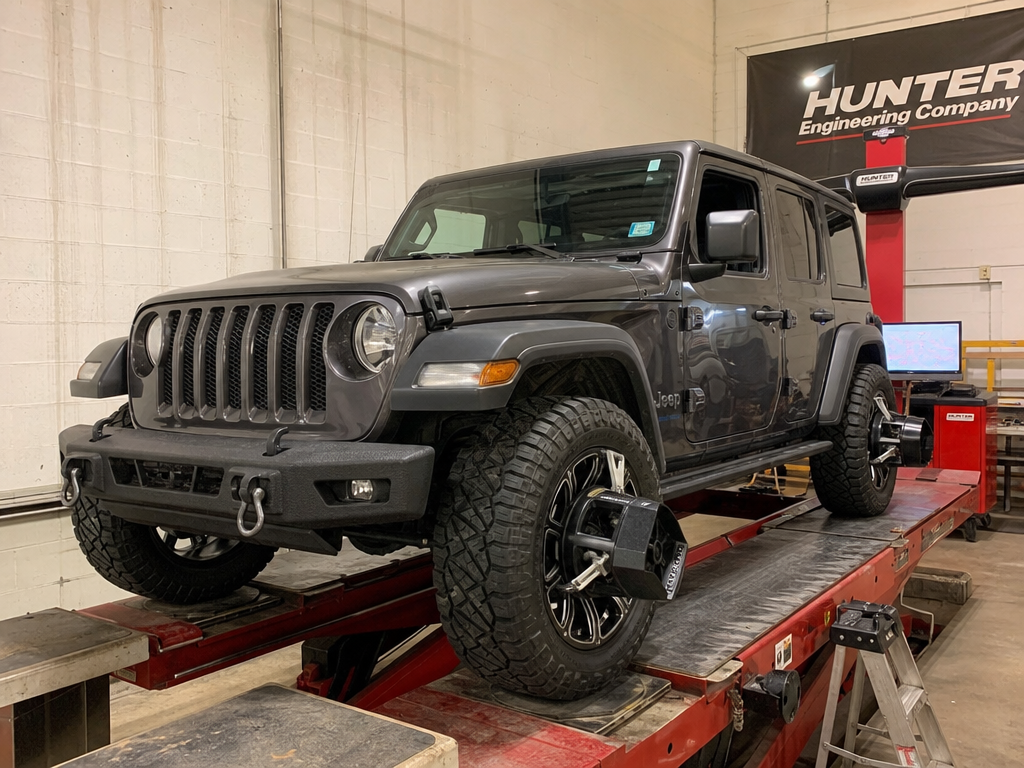
What We Fix
Track bar angle and drop bracket. Caster correction via cam bolts, plates, or control arms. Ball joint and tie rod end replacement. Wheel bearing inspection and replacement. Post-repair alignment. Road test confirmation.
What We Don't Do
We don't install a steering stabilizer as a standalone wobble fix. We don't quote parts before inspecting the truck. We don't perform the alignment before the geometry correction is in place — alignment on incorrect geometry is alignment to the wrong spec.
Vehicles We Service
Jeep Wrangler JK and JL. Jeep Cherokee XJ and ZJ. Ram 2500 and 3500. Ford F-250 and F-350 Super Duty. Toyota Tacoma and 4Runner (IFS wobble is a different mechanism but similarly diagnosed). Any solid-axle or IFS truck with post-lift handling issues.
Common Questions About Jeep Death Wobble After Lift in Houston
Serving Greater Houston for Post-Lift Death Wobble Diagnosis
Iron Ridge Off-Road is on Westheimer Rd in Houston. We diagnose and repair post-lift death wobble on Jeeps, trucks, and SUVs from across the Houston metro — Katy, The Woodlands, Sugar Land, and beyond.