What a Leveling Kit Actually Does
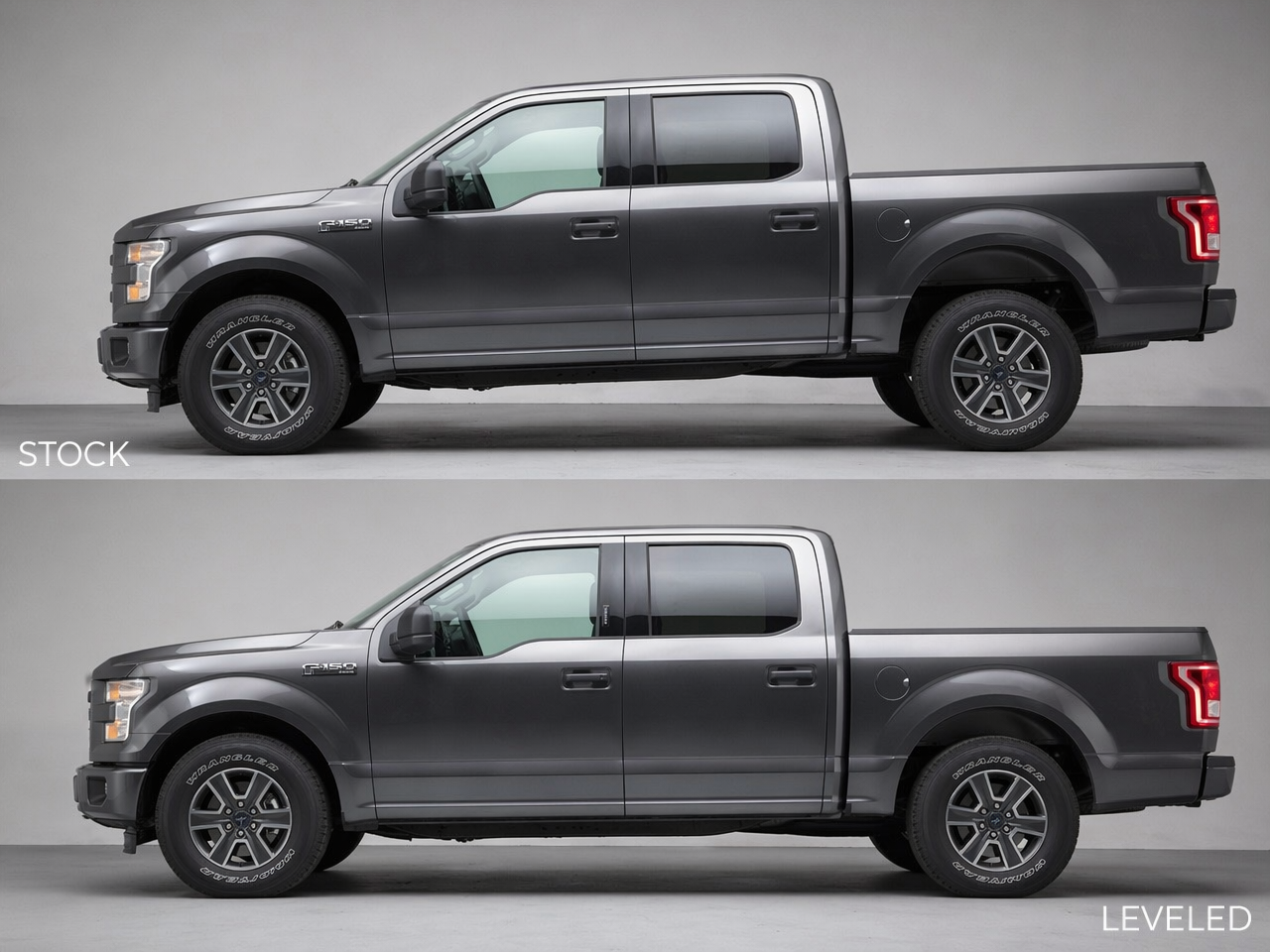
Here's the thing most owners don't realize: almost every factory truck sits nose-down on purpose. Engineers design it that way so the truck squats to level under payload and towing loads at the rear. Empty, it looks like the front end is drooping. Loaded, it sits flat. That's the factory compromise — and for a lot of owners, it's the compromise they don't want.
A leveling kit raises the front of the truck 1.5 to 2.5 inches to match the rear, creating a flat, aggressive stance. Visually it's a dramatic transformation — the truck stops looking like a work truck dragging its nose and starts looking like a purposeful build. Functionally, the lift in the front is usually enough clearance to run true 33-inch tires, and on some platforms mild 34s, without rubbing at full steering lock or on compression.
It isn't a suspension lift in the real sense. It won't change your approach angle the way a 4-inch lift does, it won't let you run 37s, and it won't magically make the truck a rock crawler. What it does is change how the truck looks and how the wheel well fills out — cleanly, at a price that's a fraction of a full lift.
Who Should Actually Get a Leveling Kit
A leveling kit isn't the right answer for every truck owner. It's the right answer for three specific types of owners — and if you're not one of them, the conversation probably shouldn't end at a level.
The Daily Driver
Wants a cleaner look without the ride-quality tradeoffs a full lift can introduce. Drives on pavement 95% of the time and wants the truck to still ride like the truck they bought — just without the factory nose-down rake.
The Tow & Haul Owner
Tows a trailer or hauls weight regularly and doesn't want to sacrifice rear payload capacity by lifting the rear. A level preserves the factory rear geometry that was designed for load capacity while still cleaning up the look up front.
The Not-Yet-Ready Builder
Wants to start somewhere but isn't ready to commit $6K–$15K to a full suspension build. A leveling kit is the honest "start here" option — and if the full build conversation comes later, nothing you spent on the level gets thrown away.
Who shouldn't get one
If the goal is 35s, hard trail use, or real ground clearance, a level is going to leave you wanting. That's a full suspension lift conversation, not a leveling conversation — and we'll tell you that at the consult instead of selling you a level you'll outgrow in six months.
What's Actually Included in a Done-Right Install
The difference between a $200 leveling kit and a $700 leveling kit install isn't the parts — it's what gets done with the parts. Any shop can bolt a spacer on. A proper install looks like this:
Correct Parts for the Platform
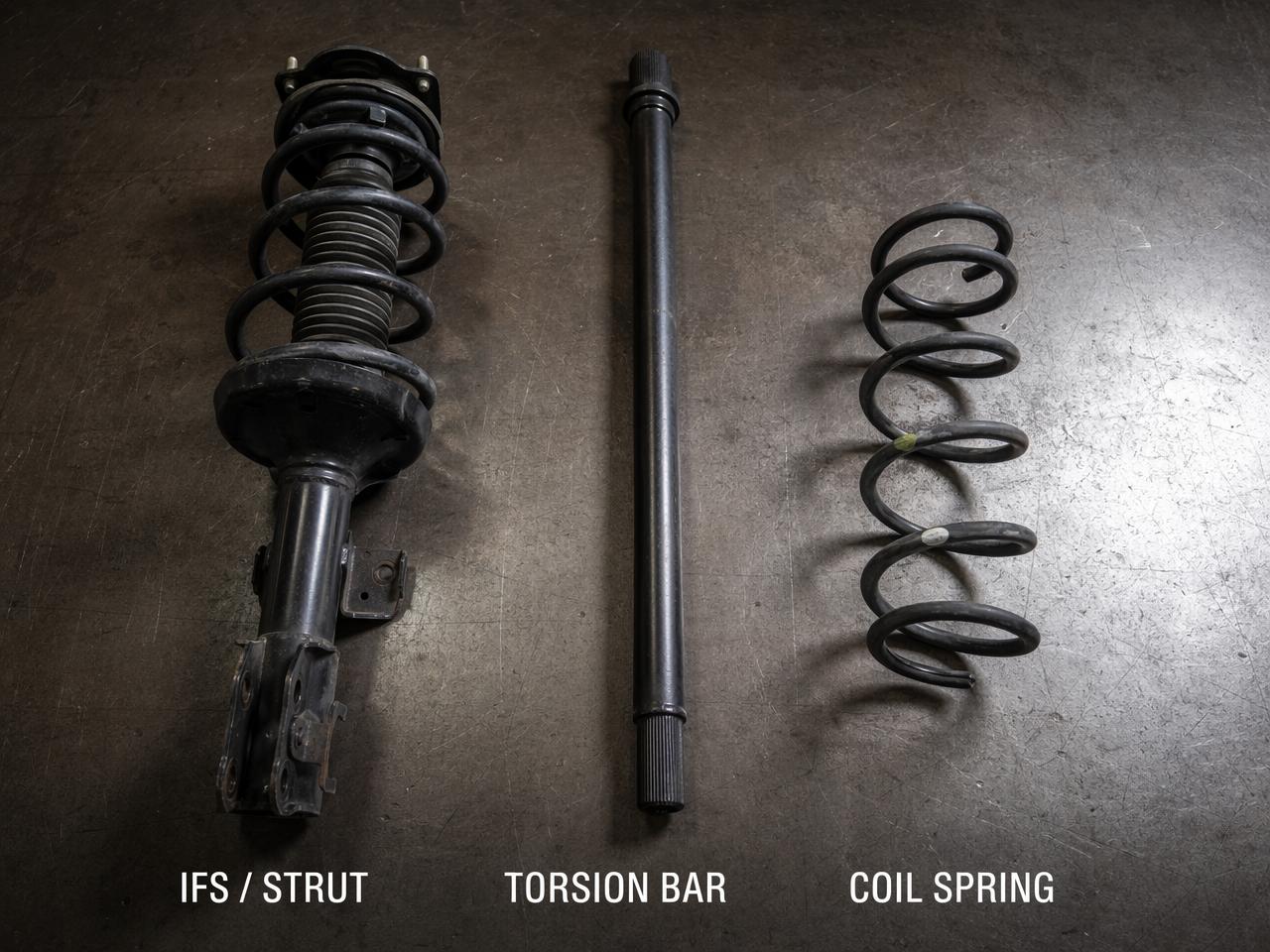
Coil spring spacers, strut extensions, or preloaded struts — the right answer depends on your specific suspension. We spec the kit to the truck, not the other way around.
Alignment, Non-Negotiable
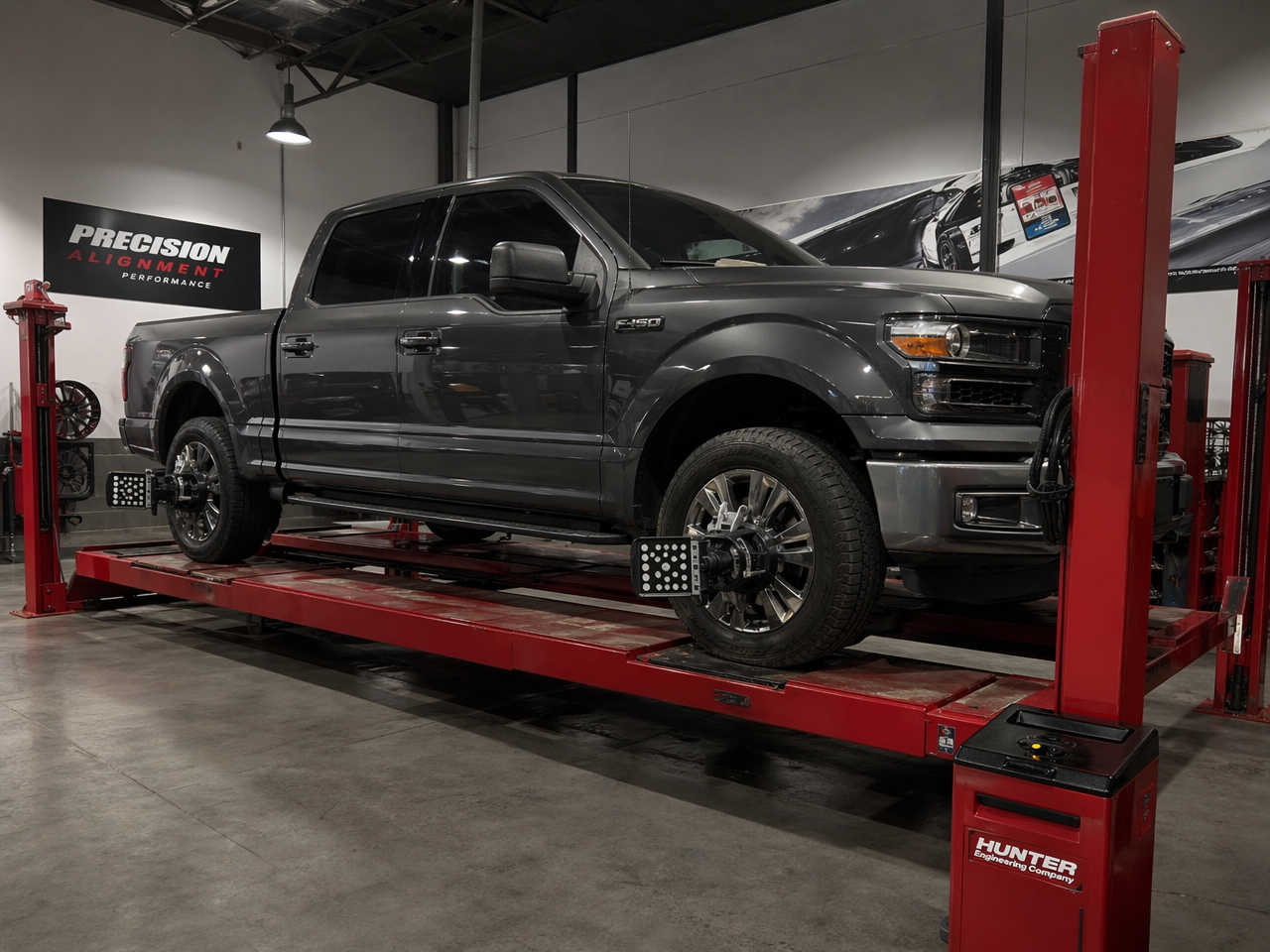
Every leveling kit changes front suspension geometry. Camber and toe shift. Without alignment afterward, you will burn through tires faster than the kit cost you. Alignment is included, not optional.
500-Mile Torque & Settle Check
Components seat in after install. We bring the truck back in at the 500-mile mark to re-torque the hardware and check alignment hasn't drifted. Free. Catches issues before they become repairs.
Why alignment isn't something to skip
This is the single most common corner that gets cut at cheap shops. A leveling kit without an alignment after leveling will destroy a set of tires in 8,000 to 15,000 miles. That's hundreds to thousands of dollars in premature tire wear to save a couple hundred bucks on alignment. The math doesn't work. We don't let the truck leave the bay without one.
Leveling Kits Are Not Universal
This is where cheap shops get owners in trouble. A generic "2-inch level" for "all trucks" is marketing, not engineering. Every platform has different front suspension geometry, different spring rates, and different fitment tolerances. The right kit for a Tacoma is not the right kit for an F-150, and neither one fits a Wrangler.
IFS / Struts
Tacoma, 4Runner, Tundra
Strut-based IFS trucks run coil-over strut spacers or preloaded replacement struts. We match the kit to the year, trim, and whether the truck has KDSS or factory Bilsteins — it actually matters.
Torsion / Coil
F-150, Silverado, Ram 1500
Half-tons typically run spacer-over-strut or Fox replacement struts with revised valving. Super Duty trucks run coil spring spacers or leveling coils — a different animal entirely.
Coil Spring
Wrangler, Gladiator, Bronco
Coil-sprung solid-axle and IFS Bronco platforms get spacer-over-coil or replacement coil springs. On these, a level often opens the door to 33s or 34s with minimal supporting mods. See our Jeep Wrangler leveling page for JK and JL fitment details.
The bigger point
The kit gets specced to the platform. Not ordered off a generic part number because that's what the previous customer got. If you've been quoted a one-size-fits-all level by another shop, that's a flag. Have questions about what's right for your truck? Our FAQ covers the most common ones.