Lexus GX Off-Road Build.
Toyota builds one of the most capable off-road platforms on the planet and sells it under two badges. One is called Land Cruiser. The other is called Lexus GX. Same body-on-frame architecture, same locking center differential, same proven V8 — wrapped in leather seats and a navigation screen. GX owners know exactly what they're sitting on. We build it accordingly. If you're also considering the Toyota side of the same family, see our 4Runner builds.
Why the GX Is One of the Best Off-Road Platforms You Can Buy
People underestimate the Lexus GX because it arrives from the factory with wood trim and a moonroof. That's not the story under the body panels. The GX rides on a body-on-frame chassis derived from the Land Cruiser Prado — a platform Toyota has been engineering for genuine off-road use since before most current trucks existed. The GX470 ran a 4.7-liter V8 with a manually lockable center differential and coil springs at all four corners. The GX460 refined that formula with a 4.6-liter V8, Torsen-type center differential, and Toyota's KDSS system on equipped trims.
KDSS — Kinetic Dynamic Suspension System — is a hydraulic anti-roll technology that disconnects the front and rear sway bars when the suspension needs to travel, restoring connection on pavement. The result is a factory articulation figure that rivals purpose-built trail trucks. Combined with genuine low-range gearing, a transfer case with real torque split authority, and a suspension geometry that was designed for uneven terrain, the GX is not a truck you build to make capable — it's a truck you build to make more capable.
We build a lot of GX rigs at Iron Ridge. They're reliable, they're pleasant to drive daily, they tow without drama, and when the pavement ends they don't require an apology. The lift, the tires, the armor — all of it makes sense on this platform in a way that's different from building an IFS pickup that was designed for the highway first.
If your GX is KDSS-equipped, every suspension component touching your front or rear spring perches must be KDSS-compatible. Standard coil spacers designed for non-KDSS vehicles can bind the hydraulic circuit and cause irreversible damage. We specify and stock the right parts before anything goes on your truck.
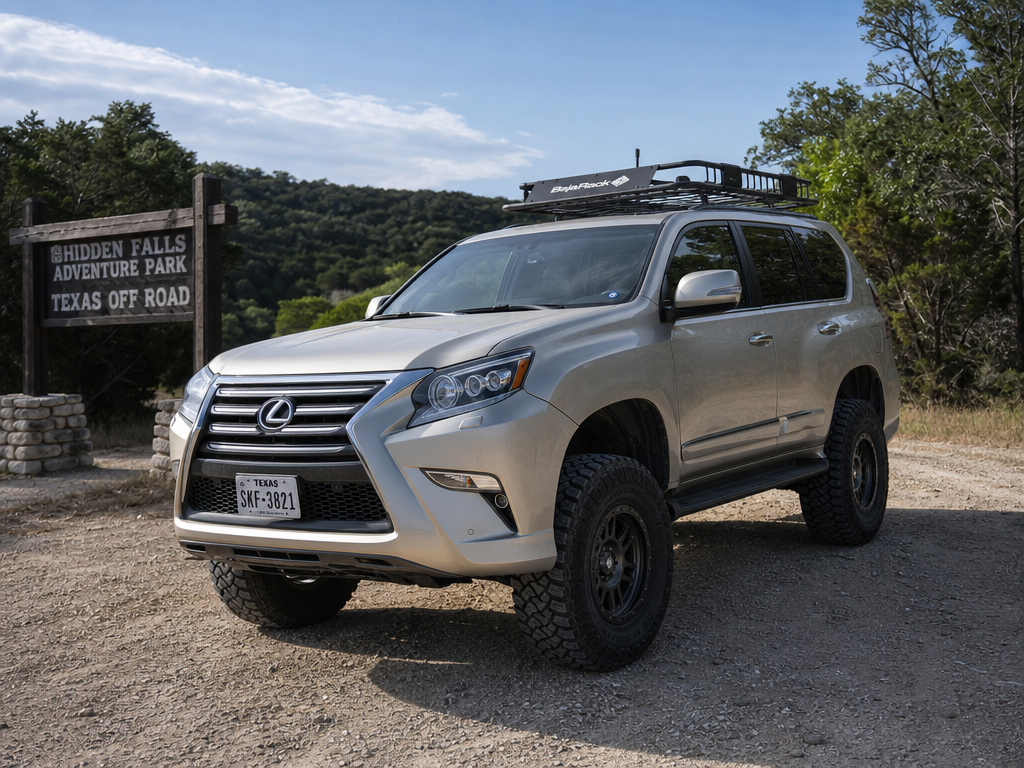
Lexus GX Off-Road Mods: What We Build
Every GX build starts with a consultation — platform year, KDSS status, intended use, and tire goals. From there we spec the right suspension first, then layer in protection and recovery gear around it.
Lift & Suspension
The foundation of any GX build. We run quality coil spring upgrades and matching shocks — OME, Dobinsons, and ARB are our primary lines. KDSS-equipped GX460s get KDSS-compatible components exclusively. Browse our full range of lift kits for the Lexus GX — target lift for most GX owners: 2" to 2.5" for 33s, 2.5" to 3" for larger tire fitment.
- Coil spring replacements (front & rear)
- KDSS-compatible spacer kits
- Shock absorber upgrades — OME, Dobinsons, ARB
- Alignment included every install
Wheels & Tires
Tire fitment on the GX is offset-sensitive. At 2"–2.5" of lift, a 285/70R17 clears on most setups without cutting. Going to 285/75R17 typically needs a small amount of trimming and correct wheel offset. We spec fitment per vehicle during the consult, not from a generic chart.
- 285/70R17 — most common 2" build fitment
- 285/75R17 — 3" build, may require minor trim
- All-terrain and mud-terrain options
- Wheel selection: Method, Fuel, steelies
Armor & Recovery
The GX has a vulnerable front differential, oil pan, and transfer case. Steel bumpers and rock sliders are the first armor additions we recommend — not because the GX breaks easily, but because it's designed for terrain where a rock strike on a casting is a real risk. Sliders protect the rocker panels on side-hill work.
- Front skid plate — differential and oil pan
- Transfer case and fuel tank skids
- Rock sliders / side steps
- Bumper upgrades and winch mounting
What the Lexus GX Lift Kit Unlocks — and Where It Stops
No platform does everything equally well. Understanding what the GX does better than purpose-built trail rigs — and where its IFS puts a ceiling on capability — sets realistic expectations and makes the build plan smarter.
What a Built GX Does Better Than Most
- Factory KDSS articulation rivals purpose-built trail trucks — before any mods
- V8 torque and genuine low-range gearing for loaded towing and recovery
- Reliability profile: the Land Cruiser Prado platform has one of the strongest long-term records in the 4WD segment
- Interior capacity — roof rack, interior cargo, and tow hitch all usable simultaneously
- Daily drivability and ADAS keep it pleasant as a full-time vehicle
- Resale value: a properly built GX holds value better than most modified trucks
Where the Platform Has Limits
- Independent front suspension limits extreme flex — it won't out-articulate a solid-axle rig at the same lift height
- Lift ceiling is lower than solid-axle platforms: 3"–3.5" is the practical maximum without serious geometry work
- KDSS adds cost and complexity to suspension work — non-compatible parts will damage the system
- Tire fitment ceiling around 33"–34" without cutting and significant offset changes
- Aftermarket part availability isn't as deep as Jeep or Toyota Tacoma — fewer budget-tier options
Lexus GX Overland Build vs. Trail Rig: Choosing Your Direction
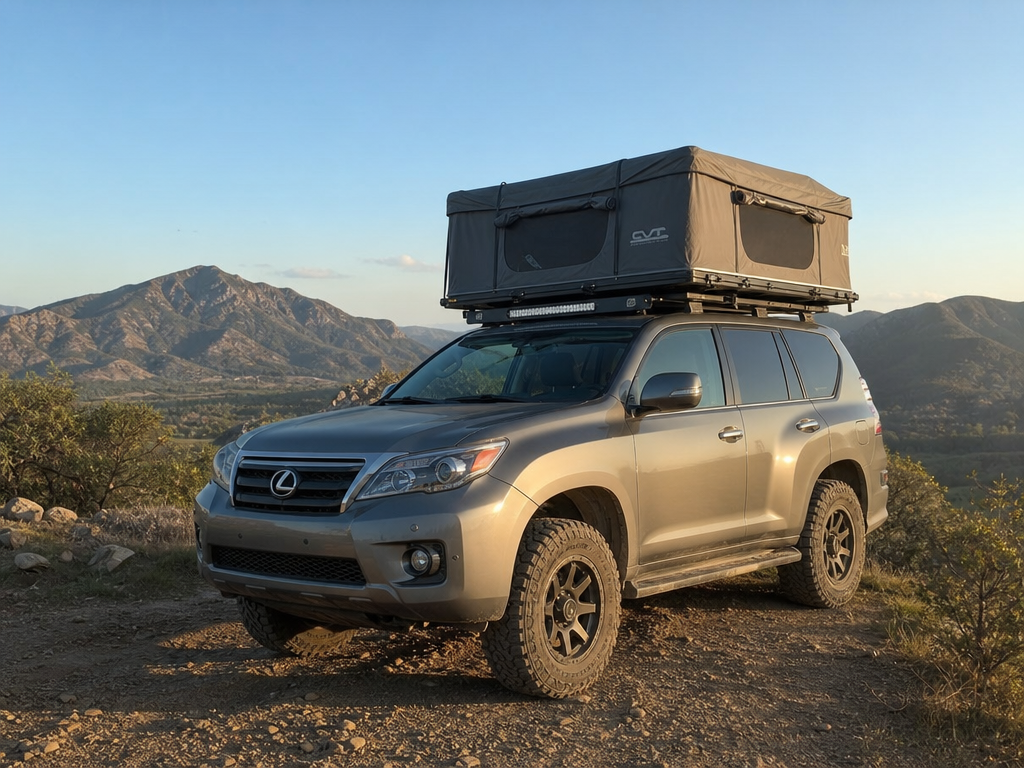
Most GX owners are building for overlanding, not competition trail use — and the platform rewards that instinct. The GX's strengths align almost perfectly with what overlanding demands: towing capacity to run a trailer or haul gear, interior space for camping equipment, reliable electronics that don't fail in the field, and genuine four-wheel-drive capability that doesn't need babysitting.
A GX overland build typically centers on suspension for ground clearance and load capacity, all-terrain tires for mixed-surface traction, a roof rack system, skid plate coverage, and a recovery kit — winch or hi-lift plus recovery boards. That build keeps the GX's daily-driver character intact while making it genuinely capable on dirt roads, creek crossings, and forest service trails.
Trail builds on the GX are more aggressive — tighter tire fitment, sliders, bumper swaps, and optimized approach/departure angles. They push closer to the platform's geometric ceiling. We've built GX rigs for technical rock crawling in the Hill Country that perform well, with the understanding that they'll meet their ceiling faster than a Wrangler or FJ at the same tire size. The right build direction depends on what and where you're actually driving, which is exactly what the consult is for. Not sure where to wheel your GX in Texas? We can point you in the right direction.
Foundation
Suspension, tires, and alignment. Gets you to the 33" tire range with improved ground clearance and a ride that doesn't punish you daily.
- 2"–2.5" coil spring upgrade
- KDSS-compatible shocks (if equipped)
- 285/70R17 all-terrain tires
- Post-lift alignment
Protection
Armor the undercarriage and add recovery capacity. Keeps the GX's expensive components safe when terrain gets real.
- Front and transfer case skid plates
- Rock sliders
- Winch or recovery kit
- All-terrain tire upgrade (if not Phase 1)
Mission Build
Full overland kit or trail-optimized build. Roof rack system, bumper swap, lighting, communication, and — for trail use — maximum tire fitment with matching geometry correction.
- Roof rack + mounting system
- Front bumper with winch plate
- Rigid Industries or Baja Designs lighting
- 285/75R17 fitment (trail builds)
Common Questions About Lexus GX Off-Road Mods in Houston
Serving Houston and the Surrounding Region
Iron Ridge Off-Road is on Westheimer Rd in Houston. GX owners come to us from Katy, The Woodlands, Sugar Land, and across the metro — most builds are done in one to two days.
Brands We Trust
The shocks, wheels, and recovery gear we fit to GX builds — brands chosen to hold up under the weight of a loaded overland rig and the miles these trucks actually cover.


